Showing posts with label acting. Show all posts

Monday, September 28, 2020

In praise of the cartoon voice actors

If you’re a professional actor, voice acting for cartoons sounds easy, right? Just speak into the mike and do what you normally do. But for those who have made careers embodying animated characters on television, it can be almost as involving as live-action; certainly as meaningful. 

I’m gonna stick to TV for this post; I imagine many of us have at least a passing familiarity with the voice talents who originated in the movies: Clarence Nash, Pinto Colvig, Chuck Jones, Arthur Q. Bryan, Mel Blanc, Daws Butler, to name a few. And I’m only highlighting a few among many.

Alan Reed and Jean Vander Pyl voiced, among other characters, Fred and Wilma Flintstone. He got his start in radio, appearing in The Shadow, The Life of Riley, The Phil Harris-Alice Faye Show and Crime Doctor, as well as the movies (including Disney’s Lady and the Tramp) and early TV. She also started in radio, appearing in The Halls of Ivy and Father Knows Best, as well as TV. She was in the original Flintstones pilot, when the show was still called The Flagstones.

While Fred and Wilma were visually inspired by The Honeymooners’ Ralph and Alice Kramden, the voices were not. Fred had Ralph’s temper, but not his Brooklyn accent, while Wilma seemed a bit less sassy than Alice. Their voices fit their looks: Fred’s voice was heavy and earthy and Wilma’s was light and thin.


Thursday, August 27, 2020

The UFO Incident

YouTube viewing

I first became aware of UFO sightings sometime in the mid-80s, and like many people, I dreamed of it happening to me one day. I still believe life of some form other than humanity is out there somewhere, but I suspect the odds of us finding it in our lifetimes is slim at best.

That doesn’t stop people from trying, of course. This 2018 New York article goes deep in re-examining UFO mythology in the age of DT and his proposed “space force.” 

If aliens exist, though, why would they abduct and experiment on humans? Do they see us as an inferior form of life? Possible—but I have a hard time imagining the popular image of little, skinny grey men with large, almond-shaped eyes and big heads (and no clothes) as genetically superior.

And at what point did this become the default image for “extraterrestrial,” anyway? (The emoji for “alien” on my iPhone is a simplified version of this.) It’s as if the same species were observing us for over half a century, and if that were so, at what point would they decide we actually are intelligent and talk to us? Or are they not as advanced as we thought? Could anal probes be their species’ equivalent of cow tipping? 

Regardless, the notion that aliens have nothing better to do than pick apart our insides persists—and one of the first widely-reported abduction stories was turned into an unusual and unsettling TV movie.

Saturday, July 11, 2020

Shadows

Shadows
YouTube viewing

“Independent film” has become a loaded phrase these days, and it  may mean one thing to you but something else to me. Is it simply a matter of working outside the Hollywood studio system? Maybe, but then why are so many smaller boutique studios owned by the majors still considered indies? Is it measured in budgets? If so, what’s the upper limit for a budget before a film no longer becomes “independent”? Is it an aesthetic, an attitude, a frame of mind? If so, who determines it? Is it a matter of distribution? Maybe, but these days it’s possible to see an indie at the local multiplex, at least in big cities.

I remember wrestling with similar issues during my years in the comics industry and I never found the answers there. With the movies, it’s probably even more knotty and tangled.

Ultimately, I can’t say I care one way or another beyond a certain point, but I think some filmmakers and some films are and will forever be associated with alternative cinema in America because of either their approach to filmmaking or their themes or their budget or any combination of the three—and it’s these films I’m gonna look at this month and possibly next month too.

For the sake of simplicity, I’m gonna focus on the 50s to the 70s; maybe the 80s if I feel like it. We have to begin somewhere, and for me, if we’re talking independent film, we have to begin with John Cassavetes.

Friday, June 12, 2020

Hell’s Hinges

Hell’s Hinges
YouTube viewing

Jeanine Basinger described William S. Hart the following way in her book Silent Stars:
His eyes contain no warmth, no little twinkle to signal to the audience that he actually has a heart of gold; in fact, his eyes are mean—small and hard. He gives off no sign of emotion or attitude, no hint of what he may do next. He just stands there, like a rock in Monument Valley, and it’s up to us to figure him out. He doesn’t even seem to be an actor. Rather, his presence seems to say, “This is what a western hero looks like”—his behavior, his look, his truth. Whatever action Hart takes will explain what the American West was all about.
While watching him in the film Hell’s Hinges, my initial impression was he reminded me of Gary Cooper: tall, laconic, taciturn. Unlike Cooper, Hart did seem to have a hardness to his on-screen presence, a quiet intensity that burned even in his vulnerable moments.

Before John Wayne, before Randolph Scott and Joel McCrea and Roy Rogers, there were two big-name western stars: Tom Mix and William S. Hart, and they dominated the silent era. Perhaps I’ll talk about Mix another day. Today it’s all about Hart.

Friday, March 13, 2020

5 Minutes to Live

The Pop Stars Moonlighting Blogathon is an event devoted to singers who act, hosted by RealWeegieMidget Reviews. For a complete list of participating bloggers, visit the link at the host site.

5 Minutes to Live (AKA Door-to-Door Maniac)
YouTube viewing

He was a musician in the fields of not only country music, but rock, folk, and gospel, a pioneer whose influence continues to be felt today. He had a roguish reputation, fueled by his addictions to alcohol and drugs. He was a deeply spiritual man who wrote songs about the plight of Native Americans and other disenfranchised people. They called him the Man in Black—but his name was Johnny Cash.

Thursday, February 20, 2020

Left Behind (2014)

The 2020 So Bad It’s Good Blogathon is an event devoted to films commonly perceived as bad, yet enjoyable, hosted by Taking Up Room. For a complete list of participating bloggers, visit the link at the host site.

Left Behind (2014)
YouTube viewing

In 1996, following a career of edgy, left-of-center work in mainstream and independent films such as Wild at Heart, Moonstruck, Raising Arizona and Red Rock West, Nicolas Cage won the Best Actor Oscar for his role in Leaving Las Vegas. It’s fair to say, though, that success went to his head, and after spending his money on some pretty wild things, he got in trouble with the IRS. To pay off his debts, he has had to take parts in some... questionable films.

Sunday, September 23, 2018

Twelfth Night (1969)

The Gender Bending the Rules Blogathon is an event which looks at roles where men play women and women play men (and other variations) hosted by The Midnite Drive-in and Angelman's Place. For a list of participating bloggers visit the links at the host sites.

Twelfth Night (1969)
YouTube viewing

I've written about William Shakespeare here before, but only in a limited sense. This seems like a good spot to go in more detail.

In college, I took an acting class and I performed a scene from Hamlet. I thought I had a grasp of the meaning behind the lyricism of the words and the outdated language, but only after I read and re-read the scene a bunch of times. I think you have to see Shakespeare performed by professionals to get a real sense of what's going on and what his characters are meant to be like.

It's a stereotype that the British do him better than anyone else, but he's part of their national heritage. It kinda makes sense! His words just sound better when they come out of the mouths of Patrick Stewart or Judi Dench or Kenneth Branagh — though we Americans are no slouches when it comes to the Bard. I once saw Richard III with Denzel Washington at Shakespeare in the Park, for example, and he was riveting.

Still, when it comes to the Bard, none of these people can compare to that great, great Polish actor, Josef Tura. You've probably heard of him.

Tuesday, January 9, 2018

New year's links

Dan Talbot
For the second year in a row, I spent New Year's with Sandi and her choral friends. They performed their annual show in Manhattan and we went out to a dinner party afterwards.

This year's show included, besides classical music selections, a James Bond medley, a Beatles medley, songs by Coldplay and Adele (imagine, if you will, hearing "Rolling in the Deep" sung by an operatic diva in an orchestral arrangement — in a church!), and even "Bohemian Rhapsody"! I teased Sandi about it afterward because she has no love for rock music, though she didn't think it was a bad song — she just couldn't understand what the lyrics meant.

On a sadder note, Lincoln Plaza Cinemas owner Dan Talbot died over the New Year's weekend. I wasn't aware of how deep his roots in the indie film market were until his name came up in relation to the sale of the theater; he did much to support independent and foreign cinema from a very early time period.

Unfortunate as it is to say, his death leaves us with very little hope that the Lincoln will be saved, but stranger things have happened — and while this closing is supposed to be for repairs, no one knows for absolute certain what the plan is if and when it reopens. This is why my movie posts include the theater I saw it in, folks.

Meanwhile, the plan for the novel is to start revising this month. It's more of a mess than I realized, but they say that's not necessarily a bad thing at this point. It may have taken me four years to reach this stage, but at least I haven't gotten tired of it yet. My fear is that I will get sick of it before it's finished, but I think this means more to me than that. Anybody want to be a beta reader?

Your links:

Silver Screenings Ruth examines Casablanca from the perspective of the bit players who were actual European refugees.

Le looks at the long and distinguished Hollywood career of that noted comedic thespian, Porky Pig.

Monstergirl is back with another epic post, this one about the Bronx' own Martin Balsam.

Even if the Lincoln Plaza reopens, what will happen to films already booked there?

My prediction came true much sooner  than expected: meet the documentarian who unraveled the secret of Tommy Wiseau.

Another piece of Cecil B. DeMille's buried Ten Commandments set has been excavated.

Here's an early review of a forthcoming movie written by Greg Sestero and featuring Tommy Wiseau in a supporting role.

Want your own portrait of Jennie?

How cable TV, specifically TCM, rescued certain Christmas movies from obscurity.

What did critics of the day think of How the Grinch Stole Christmas when it first came out?

Come back tomorrow to find out the theme for this year's blogathon!

Saturday, December 2, 2017

The Facts of Life

The Lucy & Desi Blogathon is an event honoring the television and film careers of Lucille Ball and Desi Arnaz, hosted by Love Letters to Old Hollywood. For a complete list of participating bloggers, visit the links at the host site.

The Facts of Life
YouTube viewing

Everybody associates Lucille Ball with her husband Desi Arnaz, but she also had a professional and personal relationship with Bob Hope. The Facts of Life was one of four films the legendary comedians made together, along with Sorrowful Jones, Fancy Pants (before) and Critic's Choice (after).

Ball and Hope had a different rapport with each other. Hope was more of a natural comedian than Desi; in Hope's first extended scene in Facts, for example, he does stand-up. In watching I Love Lucy, or her movies with Desi, there's more of a sense of Lucy as the special one, even though the spotlight is on both of them. Lucy's the one doing the crazy things: stuffing eggs down her blouse, driving a lawnmower out of control, etc.

With Hope, it feels more like a match-up of equals, at least here; they both have so much experience, not just as comedic actors, but as actors, and it shows whenever they're on screen together. Desi was an actor, but he was also a musician and a producer, careers about which he was equally passionate.


In Facts, Ball and Hope are friends who cheat on their spouses with each other. Age plays a role, but for laughs: in one scene, they swim on the beach at night, but when they're about to kiss, she catches a cold; in another, they both squint at their playing cards until they both admit they need their glasses after all. It's not Brief Encounter.

Ball and Hope start their affair while on vacation; the problems arise when they go back home and attempt to recapture the magic. The moments are funny, but they're also tinged with a little sadness, too: in trying to evade their respective spouses, they're like teenagers sneaking out of their parents' houses to rendezvous at Lovers Lane.


Facts was released in 1960, the same year as Lucy's divorce from Desi, as well as the end of the I Love Lucy spin-off, The Lucy-Desi Comedy Hour. According to the book, Desilu, by Coyne Steven Sanders & Tom Gilbert, Desi was charged with "extreme cruelty" and "grievous mental suffering" as a result of his drinking and womanizing. Lucy knew how their fans would react to the news:
..."I received eight thousand letters at the time of the divorce announcement and read most of them," Lucille said later.... "They said, 'Why isn't there something you can do?' They didn't know I had been trying to do it for years. I was painfully aware of the feeling the American public had for Lucy [Ricardo] and their need for Lucy and Ricky as a happy family. The awareness held up my decision for a long time, until I couldn't allow it to do so anymore. Lucy solved a lot of marital problems for our viewers, and the idea of finding a laugh in a hopeless situation worked for Desi and me for a long time, too."
Their separation was amicable, all things considered; in fact, Ball and Hope tried to get Desi to appear in Facts, but he said his TV production commitments left him with no time.

Lucy would go on to meet comedian Gary Morton and marry him a year later; they'd stay together until her death in 1989...but that is another story.


-------------------------
Related:
Desilu Studios
Books: Desilu

Other Lucy & Desi movies:
The Long Long Trailer
Forever Darling

Wednesday, September 20, 2017

A Double Life

A Double Life
YouTube viewing

I still remember how shocking it was when Heath Ledger died. The widely-held belief at the time, which has persisted for years, was that his role as the Joker in the Batman film The Dark Knight somehow drove him nuts, that he took the role of the psychopathic thrill-killer too seriously, and this led to his death from drug overdose at the age of 29. Indeed, this perception may have led to his posthumous Oscar win. A documentary was released earlier this year, made with his family's support, that disputes this belief, but one suspects it will forever be a part of his legend, that it will cling to his memory like a shadow. It simply makes for better copy.

In my limited experience in acting, I was taught to find an emotional truth that you can bring to your role, to inform your character. I remember trying to do that, though it was never for more than a scene or two in class. If I were to try it for the length of a play, well, I can only imagine what that might be like. I suspect it's difficult to draw upon that emotional well for an extended length of time and not have it do something to your head.

This is the subject of A Double Life, the George Cukor film written by Ruth Gordon & Garson Kanin about theater acting, featuring Ronald Colman in his Oscar-winning role. 


This was one of the most unusual Old Hollywood films I've ever seen. Colman literally did two movies in one: the story of Tony, the Broadway thespian and his descent into madness, and Othello, performed on an actual stage in front of an actual audience, with makeup, costume, sets and everything. 

Cukor and the Kanins sought to immerse us in the life of the theater; we see big chunks of the Othello play, but we also see random audience reactions during key scenes, something you don't see often. Colman gives a great monologue about theater acting, set to a montage of behind-the-scenes preparation. Also, the film takes its time to get going. It feels more like a character-driven story than a plot-driven one.


The Othello half looks magnificent. This is one time I can accept seeing blackface in an old Hollywood film, partly because it's Shakespeare, partly because it doesn't feel exploitative. In fact, given Colman's beard, wig, and wardrobe, I thought he looked a lot like a Klingon! (And as we all know, you cannot truly appreciate Shakespeare until you have read it in the original Klingon.)

Tony takes the role of Othello reluctantly, as if he knows he shouldn't get too close to it. Events in his personal life begin to resemble the play, but even before they do, we see him thinking about the role, letting it get under his skin (which we're led to believe is not necessarily a bad thing), even causing him to have an illicit affair with Shelley Winters. He doesn't come across as peculiar or emotionally disturbed at first, but then, Ledger probably didn't, either.


I don't wanna draw too many comparisons between this fictional character and Ledger, especially since no one really knows what he was thinking while he filmed The Dark Knight. His family insists playing the Joker didn't mess with his head; fine, but something did, or else he'd be alive now. Life makes clear the role of Othello did screw with Tony, but something within him made him susceptible. That is less clear. Maybe it can't be known. Why does anyone succumb to mental illness?

Life is so unlike Cukor's other work in terms of subject matter and characterization, one wonders why he, or the Kanins, for that matter, didn't do more work in this vein. Maybe it hit too close to home?

Thursday, June 1, 2017

Wonder links

I've noticed something about classic film bloggers lately. Blogathons have gotten so popular, some bloggers go from one to the next, with no other type of post in between. It's a tribute to the ubiquity of the meme that this is totally possible. When I began WSW, I was convinced I had to blog all the time in order to establish a presence. I think if I were to start out now, knowing what I do about blogging, I might stick to blogathons too, at least at first. Eventually, though, there would come moments like this, where I wanna blab about other stuff.

Last month, Sandi and I went to a local production of Raisin, the musical version of A Raisin in the Sun. It was put on by the Astoria Performing Arts Center, which I admit I wasn't aware of before. Raisin is basically the Lorraine Hansberry script with songs added. They're very good songs. All the principal characters get them, both solo and in groups. As I told Sandi afterwards, whoever plays Walter Lee will have to contend with the memory of Sidney Poitier, a heavy weight to bear. Warren Nolan Jr. didn't have his physical energy, but he was good. He had a superb singing voice.

Comings and goings: Bibi & Eric came into town over Memorial Day weekend and we went down to Coney Island. It was their first time there. We rode the Wonder Wheel and the Tilt-a-Whirl, but they balked at the more daring rides. Pity. We ate at a Ukrainian restaurant, where the matronly waitress told us all about the food and tried to teach us a few Ukrainian words. 

Also, a couple of weeks earlier, John & Sue threw a going-away party on the occasion of their impending departure from New York. After too many years at a job that drove him nuts, John's gonna pursue writing on more of a full-time basis. They're only going upstate. Still, I feel like an era is ending. John's my oldest friend. Knowing he was always around was comforting. As for Sue, I've grown to deeply appreciate her as a friend and the perfect companion for John. I can't imagine anyone else putting up with him on a daily basis!


Behold the trailer for Star Trek: Discovery. It certainly looks more cinematic than its predecessors. I'm thrilled to see Michelle Yeoh in Star Trek, but one has to remember she's not the star here. That would be Sonequa Martin-Green. Her Cmdr. Rainsford does look like she's gonna undergo a kind of trial by fire, with the Klingons as the forge. Judging from their look, as well as the look of the uniforms and sets, I'm convinced this is the alternate timeline, which is not what we were initially led to believe. Sigh. Well, I'll be there for the premiere, if they ever manage to finish this bloody show. It's been delayed at least twice! (By the way, check out the trailer for Seth MacFarlane's live-action Trek-like series - on free TV!)

It's been a light year for new releases around here so far. I expect that to change somewhat this summer. After debating whether or not to return to the long underwear scene, I decided I gotta see Wonder Woman simply because it's a movie that's shamefully overdue. Plus, it's not directed by Zack Snyder. The new Apes movie is a given, and holy guacamole, Christopher Nolan doing the battle of Dunkirk? Sign me up. Also, outdoor movies - assuming the weather warms up enough for them - may be thin this year because there are so many screenings of films from the last year or two. We'll see.

Your links this month:

Aurora offers a guest post from someone who has a slightly dissenting opinion on Feud.

Paddy reviews a book about a pre-code actor and interviews the author.

Ivan, like, totally grooves on the 80s Sarah Jessica Parker series Square Pegs.

Kristina falls under the spell of Boris Karloff's Invisible Ray.

Pam plays with some shockingly age-inappropriate Alien toys.

Angela on Feud.

This review of Feud provides more of a historical perspective.

When the late Jonathan Demme was still an actor, he appeared in schlock like this.

Now it can be seen: lost footage of the Beatles filming Help!.

In appreciation of Joan Crawford, the Thespian.

No, seriously, WTF were they thinking in trying to remake Dirty Dancing?

Wednesday, December 28, 2016

Fences

Fences
seen @ Cinemart Fiveplex, Forest Hills, Queens NY

I've spent the past three years struggling to write a novel about baseball. It really has been a struggle, too. Some days I think it's brilliant, other days I think it's a complete waste of time. I can write the stuff with pitching and batting and home runs and strikeouts, but tying it all to real, believable people, who laugh and cry and are virtuous and vicious, that's another story. I've written for much of my life, in one form or another, yet I feel like I don't know a thing about storytelling: the ability to create a narrative and sustain it, to find the ups and downs of human behavior and to end someplace different than where I began. Maybe I don't.

I chose baseball because I grew up with it, because I have strong feelings about it still, all these years later, even when I think I've outgrown it and it doesn't speak to me anymore. I chose it because I still stop and watch kids playing with aluminum bats on a neighborhood field, or softball teams from rival midtown businesses going at it in Central Park. I can't help but watch. It's my hope I can convey my feelings for the game, good and bad, within my novel. My writing group seems to think I'm on the right track, at the very least.

Then I see a movie like Fences and I'm ready to burn my manuscript. To call it a sports movie isn't really accurate; for all the talk of baseball (and football), the closest we come to it are passing shots of kids playing stickball in the street that have nothing to do with the story directly. 


Mostly, baseball is used as a metaphor to express the life and worldview of Denzel Washington's character Troy, a former Negro League player who never had the chance to cross over into Major League Baseball. Troy is a larger-than-life figure; a hard man, set in his ways, one who loves openly and freely, yet at the heart of him is a secret. Its revelation, as you might imagine, changes everything.

August Wilson's award-winning play is one part A Raisin in the Sun, one part Death of a Salesman. Like my novel, there's a family with issues, but seeing this story makes me believe I could push my characters' conflicts harder. A lot harder. See, as a writer, if you spend enough time with your characters, you start to like them. You want to protect them from harm. 


Like Troy says to his younger son, though, there's no law saying I have to like them. I do, however, have to be truthful to them, even if it means taking them places I don't want them to go. This movie reminded me of that. There are uncomfortable moments and harsh moments and WTF moments, but they all make for a better story, a more truthful story. That's something I've gotta try to remember with my novel.

One review I read thought Denzel might have given the best self-directed performance in film history. That got me thinking about which others could fall into that category: Chaplin in Modern Times; Welles in Kane; Olivier in Hamlet; Woody in Annie Hall; Costner in Dances with Wolves and Gibson in Braveheart. I think you'll agree those are all pretty monumental.


I can't imagine how hard it must be to not only direct yourself in a movie, but to do it in one where you're on the screen most, if not all, of the time. Directing requires a hyper-awareness of so many things at once: the film's tone; how little or how much you're getting out of the actors; the light, especially if you're outdoors; any potential distractions; scene continuity; the list goes on. Now throw your own performance, your interaction with the rest of the cast and whether you yourself are up to snuff, on top of all that. Is it any wonder Hitchcock stuck to cameos?

This is Denzel's third time in the director's chair, and in each of his films, he has played the starring role. Seeing actors direct themselves is no longer a novelty, but I think we've taken for granted how difficult it has got to be. 

In Fences, Denzel made it look easy. Yes, he performed the play on Broadway (and won the Tony for it), so he knows Troy inside out by now. Knowing how big this film had the potential to become, though, and is, he raised his game to another level - as if it wasn't high enough to begin with! 


Working once again with Viola Davis (someone get her a box of Kleenex already! She's always running her nose in movies), who appeared in the play with Denzel (and also won the Tony), must have been a big help. The rest of the cast is great, and if the film's stage origins are obvious, that's hardly a hindrance. This may be one for the ages.

I saw Fences on Monday, the 26th, the "observance" of Christmas Day, so it was like a holiday. The late afternoon show I had planned to attend at the Cinemart was sold out! Hadda get the next one. Again, though, it means the neighborhood supports this place. Given that the Cinemart has been on the comeback trail for the past couple of years, it's really good to see. On the down side, though, Assassin's Creed was playing next door and it was LOUD.

The audience, from what I briefly saw of it, was a mixture of black and white, but the black folks made their presence known, if you follow me. There were more than a few oh-my-gods and is-he-seriouses, and some you-go-girl-type applause in a key scene with Davis.

I just had to laugh. It had been awhile since I had seen a movie with a vocal audience of any kind, black or white. I admit, sometimes I miss it. Then again, several cell phones went off during the movie, so maybe I don't miss it that much!

Wednesday, November 30, 2016

Penny Serenade

The Cary Grant Blogathon celebrates the life and career of the classic film star, hosted by Phyllis Loves Classic Movies. For a list of participating bloggers, visit the link at the website.

Penny Serenade
YouTube viewing

Watch enough movies and listen to enough music and sooner or later, you'll start to imagine what a soundtrack to your life might sound like. Many of us program our iPods with certain songs we play over and over, or fine-tune our Pandora or Spotify playlists for that perfect selection of tracks. What I'm talking about is similar, only the songs represent specific times and places in your life. Since we're all the stars of our own personal movies, it follows that they need killer soundtracks, right?

I have given this some thought, as you might imagine. One day I'll make up some excuse to name my ideal soundtrack, but not today. I will say that it includes a little bit of everything: Motown and country for my parents, disco for my sister, Top 40 for my junior high years, classic rock for high school, grunge for college - though beyond that point, the timeline of my life will get older, and so will the songs!


I've even toyed with the thought of starting a second blog for this purpose: to talk about music the way I talk about movies, with less critical discourse and more personal meditations. Nick Hornby released a volume called Songbook, which collects a bunch of essays he wrote about individual songs and his unique relationship with them. He can talk critically about music, and at times in the book, he does, but he spends more time discussing memories, feelings and thoughts associated with the songs he's chosen. If I were to start a music blog, I would want it to read like this, though I'm not half the writer or critic Hornby is. Maybe after I finish the novel? I dunno.

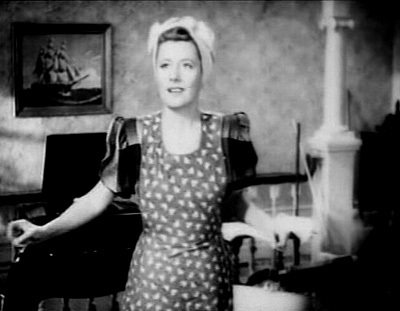
Penny Serenade plays with the personal soundtrack idea (though I doubt they called them soundtracks in 1941, the year this movie was released). In the beginning, the marriage of Cary Grant and Irene Dunne is about to end. Dunne is ready to leave him for good, but before she does, she goes through her record collection. Each song she plays triggers a memory of their relationship, and that's how we learn what brought us to this point. It's not a bad storytelling device, though after awhile, you start to wonder when she's gonna finish and leave already.


This movie earned Grant the first of his two Oscar nominations for Best Actor, without a win. Hard to believe, isn't it? One of American cinema's greatest, most iconic, most versatile leading men never got nominated for The Philadelphia Story, Notorious, Suspicion, or North by Northwest, much less won. I'd say it's the curse of the pretty-boy actor (see also: Tom Cruise, Brad Pitt, Mark Wahlberg, Matt Damon, Johnny Depp), but it's hard to say for sure. Leonardo DiCaprio did finally win the Best Actor Oscar, after all, so maybe there's hope.

From Grant's first scene, we can tell his performance in this movie, about a young couple's quest to have and raise a child, is different. We remember Grant as the suave, debonair man-about-town who's smooth with the ladies, yet not afraid to take a pratfall or two sometimes. The Grant in Serenade is, in general, quieter, more down-to-earth, and more emotionally vulnerable.


A few years ago, I tried to speculate why today's leading men avoid romantic movies like the plague. I cited Grant as an example from the past of an actor as convincing making love to a woman as when he's doing other things in the movies. In Serenade, he doesn't court Dunne as a sophisticated ladies man; he does it in an almost introverted way. He buys a bunch of records in the record shop she works in, even though he doesn't have a player, just so she can wait on him and they can talk longer.

Because this is Grant and Dunne, you expect some silly antics or witty banter, but they play it straight. Throughout the movie, Grant expresses his love for Dunne, in words and deeds, with a naked sincerity and passion rarely seen in today's leading men when their characters have wives or girlfriends...


...and that love is extended to their adopted child. Indeed, director George Stevens goes to great lengths to portray the reality of parenting: the hard work, the constant worry, the sacrifice, and how it can cause problems in a marriage. There's one extended diaper-changing scene, shot in real time with very limited cuts. Dunne is frustrated and nervous over the procedure, but Edgar Buchanan is calmly confident. I found it interesting that Dunne's character was so gung-ho about having a child, yet so clueless about how to care for it also. It's the sort of thing that makes you think parenting might not be for everyone...

Serenade isn't perfect. Spoilers for a 75-year-old movie to follow: in the scene that undoubtedly clinched the Oscar nod for Grant, he pleads with a judge to let him keep his adopted daughter. The judge insists it's a matter of law, but in the very next scene, there's Grant with the baby, happy and smiling. So much for the law! Also, it was shot from too far a distance. We really need to see Grant's face in close-up and we don't.


It doesn't matter, though, because later on, the child dies - off-screen! We find out in a letter Dunne writes to adoption agent Beulah Bondi, only Dunne's handwriting is a little on the fancy side. I had to stop the movie several times to read her letter! The death drives Grant and Dunne apart, but it's okay; Bondi finds a new baby for them at the last minute before they can break up. Hooray! Whatever.

Still, it's a good movie overall and a rare chance to see Grant not be Grant in a movie. Sort of.

-----------------------
Other Cary Grant movies:
Charade

Saturday, November 5, 2016

Moonlight

Moonlight
seen @ Alamo Drafthouse, Brooklyn NY

I almost passed on Moonlight. I had read the brief capsule description on the Kew Gardens Theater website and I wasn't completely sold on the film. I figured I'd need to see a trailer before I could decide, but I wasn't in any hurry to see one. Then I saw it was one of the first movies to play at the brand-new Alamo Drafthouse theater in Brooklyn. Eventually I looked the movie up on Rotten Tomatoes and, well, you know the rest. Everyone loves this movie to death, and with good reason.

I was amazed at how director Barry Jenkins was able to build two distinct characters, Chiron and Kevin, out of six different actors in three age groups. One gets the sense of consistency in the performances, especially from the three actors portraying Chiron: the guarded nature, certain head movements.

I was reminded of the three Brionys of Atonement, not to mention the 12-year performance of Ellar Coltrane condensed into the film Boyhood. In each case, consistency was necessary to make the character believable as a single person, stretched out over time. I think Jenkins accomplished that here.


Like Pariah a few years ago, this is a coming-of-age story about growing up black and gay, only from the male instead of the female perspective. I think we've heard the stereotypes about gay black men; how supposedly over the top they act. I'm pretty sure I've never met one, so I can't say if it's true. Fortunately, Moonlight punctures that familiar image and presents a different one, using deft camerawork and subtle storytelling to show us a person, searching for an identity all his own in a world eager to tell him who he ought to be. That much I could relate to, and understand. I found the film riveting from start to finish.

So the Alamo has finally come to the five boroughs after I first shared the news here way back in 2010, the first year of WSW. I couldn't find the theater at first. I knew it was in the vicinity of the Fulton Street Mall, but all the side streets tripped me up at first. When I asked for directions, I accidentally said "Bond Street." It's actually on Gold Street, but there really is a Bond Street in the area. Funny that.


Alamo is on the fourth floor of a mall building with other stuff on the lower floors. I had hoped it would be on street level, but this being New York, that's not always possible. The Shining Overlook Hotel carpeting is a nice touch. All around are posters from what I believe are Turkish movies. Why? I have no idea. I can't say I've heard of any of them. I guess Tim League thinks they're cool. Eh. It's different, if nothing else.

The food was excellent (I had a burger with fries); the service was excellent (an usher actually led me directly to my seat!). The seats were comfy and the bathrooms were nice and clean. That said, I'm not sure how often I'll come back. For one thing, this Alamo is expensive as hell! $14.50 with no Tuesday all-day matinee like at the Yonkers location. I was told the matinee ended at 1 pm. There was a 30% discount on the menu. If there wasn't, I doubt I would've ordered any food. Even the traditional movie theater food was pricey; eight bucks for a popcorn?


Maybe it was there and I didn't see it - which is entirely possible; if so, ignore the following - but when I entered the lobby, I didn't see a board showing films and times. I would think that was standard for any movie theater. I had to ask if Moonlight was playing just to be sure! I should never have to do that in any theater. The Yonkers theater has "now playing" posters hanging outside at least.

Overall, while it looked and felt the way an Alamo should, I was disappointed with it in other ways. I'm part of the Victory program, which does mean you get special discounts and privileges the more you attend (how? I was never issued a membership card), but as expensive as the Brooklyn theater is, I think I may opt to stick to the Yonkers theater, despite the location problems with that place I've talked about before. Special events? We'll see. But I had hoped for a little better.

Sunday, October 2, 2016

Spaceballs

The Dual Roles Blogathon examines films in which individual actors take on multiple roles. It is hosted by Christina Wehner and Silver Screenings. For a complete list of participating bloggers, visit the link at the host site.

Spaceballs
seen @ Syndicated Bar, Bushwick, Brooklyn NY

Oy vey! Can it be that Mel Brooks is still alive and entertaining people at age 90? He must live right. Brooks is as much an "auteur" filmmaker as all the other guys whom you normally associate with that loaded word, but is never acknowledged as such - one reason I dislike the word (even though I've used it in the past). Brooks' movies require no specialized knowledge to understand and the best of them hit you where you live. They're not afraid to be crass, slapstick-y, or utterly stoopid. You have to admire a writer-director who goes for the jugular that way, especially since he hits a lot more often than he misses.

For this post, in addition to watching Spaceballs, I went much further back and looked at clips from Brooks' TV shows, two in particular: Your Show of Shows, the sketch variety show starring Sid Caesar, and the spy spoof Get Smart, with Don Adams.


Show was like SCTV or Laugh-In, skits with a small repertory of comedic actors such as Imogene Coca and Carl Reiner, headlined by Caesar, a jazz musician turned TV star. Brooks first joined with Caesar in 1949 as his gag writer on NBC, and stayed on board a year later when Caesar created Show. I liked it. Caesar and his crew made working on live television look easier than it must have been. Their characters are outlined well by Brooks and the writing staff (which also included Neil Simon), but the actors gave it life - without ad-libbing.

Smart was a product of the Cold War 60s, when spy stories were hip, co-created by Brooks and Buck Henry. Brooks has said Smart was a response to the safe, domestic family sitcoms of the early television era, an attempt to do something zany. He resisted attempts by ABC to soften its edges. There are only clips on YouTube, so I was unable to get a real feel for the show. What I saw was okay. I vaguely recall watching the show in reruns as a little kid. I certainly remember the theme song and opening credits.


By the 80s, Brooks' brand of goofball humor was co-opted by younger comedic talent such as Steve Martin, Chevy Chase, Lily Tomlin and Bill Murray, and even surpassed by the raunchier, edgier humor of Eddie Murphy, Richard Pryor and Steve Carlin. There was still an audience for the kind of movies Brooks made, though, and Spaceballs still holds up fairly well as an example of satire.

Brooks plays two roles here (he said, finally getting to the point of this blogathon post): President Skroob, the supreme leader of the Spaceballs, and Yogurt, the Yoda-like mentor figure and shameless merchandise hawker. Both roles are typical vaudevillian Brooks: smarmy, unctuous and pompous - but in a good way! The sight of Brooks in heavy alien makeup is unusual, but certainly appropriate for a movie like this. I think he must have stood on his knees to make Yogurt short, and I guess his long robe covered the rest of his legs. His characters never share a scene together. That's something I would've liked to have seen - Brooks playing opposite himself.


I saw Spaceballs at a new-to-me venue: Syndicated Bar in Brooklyn. It's good. It's a largish bar and grill in the front, with a stadium-seating-style screening room in the back. Like the Alamo Drafthouse, they serve restaurant-quality food and drink that you can order from your seat. There are little tables in front of your soft, cushy bench seats and the wait staff delivers your meal straight to you. Movies are a mere three bucks. I would definitely come here again.

My companion for the evening was Alicia, who had originally started up the moviegoing club now run by Vija. I hadn't seen Alicia in a couple of years at least. I neglected to ask what made her step down from her position. She lives within walking distance of the bar.

Spaceballs was part of a Mel Brooks retrospective at Syndicated that I saw advertised on Facebook. Alicia had marked herself down as a "maybe" to attend before I asked her to come with me. I told her about my recent adventures in cooking and we talked food. It was a nice night.

----------------------------
Other movies with actors in multiple roles (a select list):
Dr. Strangelove
Son of the Sheik
Cloud Atlas
Dar He: The Lynching of Emmett Till
The Play House
Coming to America
The Wizard of Oz
Superman
Some Like it Hot