Showing posts with label childhood. Show all posts

Thursday, September 24, 2020

Other favorite cartoons

Back in the 70s and 80s, it was still possible to see animated shorts that originally played theatrically on free television, so the newer, made-for-TV cartoons I watched as a kid were mixed with much older material.

The animation career of Walter Lantz goes all the way back to the silent era. At Universal, he directed Oswald the Lucky Rabbit shorts and his studio created Woody Woodpecker, Andy Panda, and Chilly Willy, characters that played on TV beginning in the late 50s.

Tex Avery began at the Lantz studio and helped develop the Looney Tunes characters at Warner Bros., but in 1942 he moved to MGM, where his cartoons took on an even wilder tone. In addition to creating new characters like Droopy Dog, he directed memorable shorts like “Red Hot Riding Hood” and the controversial “Magical Maestro” (which is hilarious; I don’t care what anyone says).

Paul Terry co-founded Terrytoons in New Rochelle, New York in 1929, and among the studio’s best known creations include Mighty Mouse (another superhero) and Heckle and Jeckle (a comedy duo).


Saturday, September 19, 2020

A few words on anime

This is not meant to be a definitive post on Japanese animation. There are other places you can go for a more comprehensive study on the subject. This will be much more subjective and personal and chances are I’ll have missed your favorite show and/or movie, so please, no whatabouts. I just feel I should bring it up because no discussion of Saturday morning cartoons is complete without it.

I was a tad too young for Astro Boy, Gigantor, Kimba the White Lion and Speed Racer, but they were among the first wave of animated programs to hit the States through syndication. The animation is on a par with American cartoons of the 60s: limited, stiff, broad. 

Some of these characters, such as Astro Boy and Kimba, were the creations of the man considered the Japanese Disney, Osamu Tezuka. A cartoonist as well as an animator, he was first published at 17, and his graphic novel series—“manga” in Japanese—remain in print to this day. In 1961 he founded his own animation production company and his TV adaptation of Astro Boy was the first to be dubbed into English for an American audience.


Friday, September 4, 2020

Hanna-Barbera

Once upon a time, Saturday morning was magical. Armed with nothing more than a bowl of sugary cereal, a spoon and a drink of some sort (it didn’t matter what), you could spend hours parked in front of the TV and commune with talking animals, monsters great and small, heroes both super and non-super, cavemen, aliens, teenagers, sentient cars and little blue elves in funny hats.

You could journey to the farthest reaches of outer space or go forwards or backwards in time; travel in race cars, spaceships, magic carpets or World War 1 biplanes; control giant robots or wear magic rings; go on tour with rock bands or solve mysteries, and all from the comfort of your home.

I’m speaking, of course, of children’s animation. Cartoons.

These days, entire channels are devoted to cartoons, whether from the glory days of Saturday morning or afterschool or newer, more modern material. One can call up one’s favorites on demand from video websites like YouTube and Vimeo, or buy box sets of them on DVD or Blu-ray. This is all well and good, but someone born in the last thirty years or so will never truly understand what Saturday morning meant to those of us who looked forward to it every week.

I’ve wanted to share my memories of Saturday morning in more detail for awhile, as well as show some respect to the people responsible for creating these characters or adapting them for animation. Now seems like a very good time. My focus will be on the creators, but I’ll also discuss their creations, naturally—and afterschool cartoons will be included in the mix where appropriate.

I will not discuss The Mouse and his friends. There is a mountain of information already out there about The Big D, its history, its role in shaping American pop culture (though these days, they buy it from other people and absorb it into their ravenous maw more than they add to it), and certainly plenty of fan tributes. I feel absolutely no need to pay any more homage. At least not now.

So let’s start instead with the company that, in many ways, is synonymous with Saturday morning for a generation of kids.

Monday, October 28, 2019

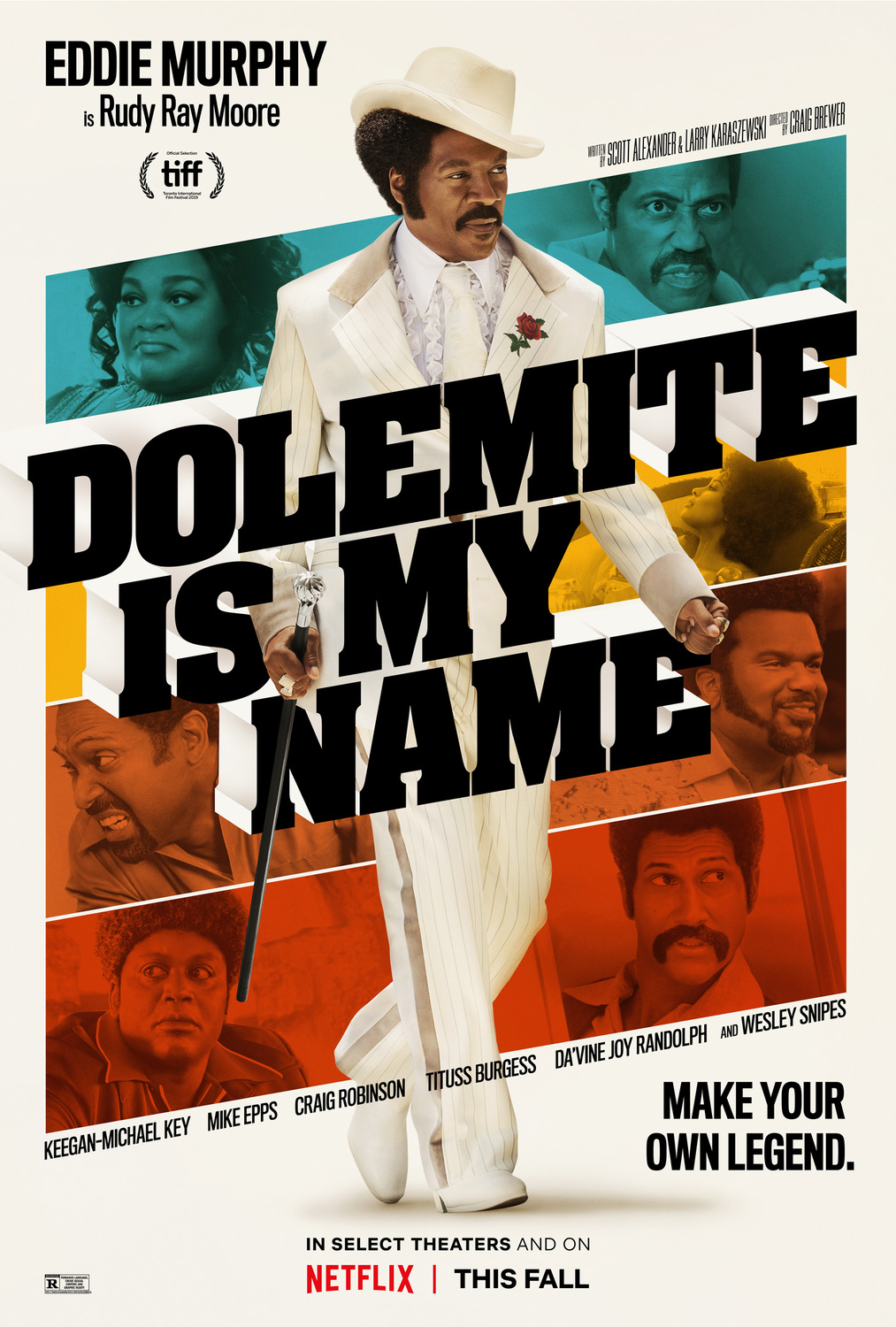
Dolemite is My Name

Dolemite is My Name
Netflix viewing

I would’ve been fifteen years old when I went to see Eddie Murphy’s concert film Raw. As I recall, someone recommended it to me. I was still getting used to seeing films by myself, and somewhere along the line I realized I could get into R-rated movies, despite them being technically verboten for me, thanks to my size, which made me look older, and lax ticket booth clerks.

And I wanted to see this one. Eddie was the reason I stayed up late on weekends to watch Saturday Night Live. Stand-up comedy was a new concept for me. I only knew Eddie’s predecessors—Bill, Richard, Redd—through the safe lens of television, both live-action and animated.

SNL was different. It came on late at night; that right there made it seem illicit, almost dangerous. The cast might do or say something... naughty! And Eddie, in particular, walked that tightrope in skits that were not only hilarious, but spoke to me in a way unlike Joe Piscopo or Billy Crystal, funny as they were too.

So why wouldn’t I want to go see him uncensored? I was too young to have seen 48 Hrs. or Trading Places and I only knew Beverly Hills Cop through the soundtrack, so this was a golden opportunity, and I took it—and I never regretted it. Eddie was part of that wave of black superstardom that swept through pop culture in the 80s: Michael and Prince and Whitney in music, Magic and Kareem in sports, Bill on TV. Everybody knew them, everybody loved them. It was a renaissance.

Friday, August 23, 2019

The Wiz

The Wizard of Oz Blogathon is an event devoted to all things associated with the 1939 MGM film and the original novel by L. Frank Baum, hosted by Taking Up Room. For a complete list of participating bloggers, visit the link at the host site.

The Wiz

It’s hard to imagine which has been more influential to American pop culture: the original children’s book The Wonderful Wizard of Oz, by L. Frank Baum, or the 1939 MGM adaptation, The Wizard of Oz. Baum was a prolific author in his time; in addition to the Oz series of books (there are fourteen), he wrote 41 other novels and 83 short stories, plus his poems and even scripts.

Oz the book was released in 1900, with illustrations by WW Denslow. Its initial print run of 10,000 copies sold out quickly. A musical stage play was made two years later, the first adaptation into another media. The book hit one million copies printed in 1938. The first film adaptation was overseen by Baum himself, a multimedia production titled The Fairylogue and Radio-Plays.

The 1939 MGM version credits the director as Victor Fleming, though several different men sat in the  big chair, including Norman Taurog, Richard Thorpe (both before Fleming) and King Vidor (after), plus George Cukor acted in an advisory capacity, though he didn’t shoot anything. The screenplay was credited to Noel Langley & Florence Ryerson and Edgar Allan Woolf, though again, other hands worked on its development, including Fleming, Vidor, Cukor, Herman J. Mankiewicz, and the poet Ogden Nash. Herbert Stothart did the score and Harold Arlen & Yip Hamburg composed the songs. Oz was nominated for six Oscars, including Best Picture, and won two: Original Score and Original Song for the all-timer “Over the Rainbow.”

Listing the many variations of the original Oz story over the years, in film alone, would take way too long—and anyway, I’m here to discuss one in particular, which recently celebrated its fortieth anniversary and is notable in its own right—especially if you’re a New Yorker.

Friday, August 16, 2019

Thank God It’s Friday

The Jeff Goldblum Blogathon is an event devoted to the life and career of the actor, hosted by RealWeegieMidget Reviews and Emma K. Wall Explains It All. For a list of participating bloggers, visit the links at the host sites.

Thank God It’s Friday

Disco! I’ve talked about it here before, and while I was way too young to have gotten involved in any disco-versus-rock flame wars civilized debates, if you had asked me in, oh, 1980, which side I was on, I would’ve put on my-my-my-my-my boogie shoes and did The Hustle to the music of Chic, or perhaps the Brothers Gibb—even if disco was dying by that point.

My sister would’ve been the reason why. Disco and classic soul is close to Lynne’s heart, always has been, and she and her husband include plenty of it in their cover band. She had a shoebox full of 45s and I believe she even had some 8-tracks, in addition to her many LPs, and whenever she wasn’t around I’d idly go through them and play a few. I was a Top 40 nerd all through grade and junior high school before I discovered classic rock in high school, so my mixtapes had not only disco, but freestyle and even some new wave.

And dancing? I must have spent the entire sixth grade trying to moonwalk. Not easy in Reeboks. I think I mentioned the bar mitzvah I went to sometime in the mid-80s where I danced up a storm with my friend Howard’s sister Susan. I’m pretty sure there was some disco on the turntable that day, though I couldn’t tell you which moves I busted.

I also recall my junior high prom, but that was in 1986 and by then, though we had plenty of Madonna and Whitney Houston and the Pointer Sisters to groove to, we didn’t call it disco. I doubt anyone did. Freestyle was lumped in with general pop music and I never made a distinction.

Saturday, June 1, 2019

Jersey Boys

The Broadway Bound Blogathon is an event spotlighting film adaptations of Broadway shows, hosted by Taking Up Room. For a complete list of participating bloggers, visit the host site.

Netflix viewing

Clint Eastwood’s adaptation of the hit Broadway musical Jersey Boys received mediocre reviews, but I didn’t think it was that bad. It certainly didn’t redefine the famous-musician biopic — it hits all the familiar beats chronicling the rise, fall and redemption of the 60s doo-wop group the Four Seasons, and maybe one shouldn’t expect more than that, particularly from a director as un-flashy and workmanlike as him. It certainly didn’t feel like a stage show, I’ll say that much — and I had no problem with him using the stage stars, including Tony-winner John Lloyd Young as Frankie Valli.


I remember hearing the Four Seasons on AM radio as a kid. In fifth grade, in fact, I had a crush on a girl named Sherri (with an “i” not a “y”), but I’d feel awkward whenever I heard the song “Sherry,” like it was advertising to the world how I felt about her. I recall thinking the group’s high-pitched voices were very unusual for guys. They couldn’t be girls, could they?

The Four Seasons were not the kinda doo-wop group my father listened to. Growing up, I always heard him play the black groups: the Drifters, the Coasters, Little Anthony and the Imperials, all those pre-Motown acts from the 50s and early 60s. I discovered the white groups like the Four Seasons on my own. I know I heard Valli’s solo hit “Grease” on the radio. I had heard the R&B remake of “Working My Way Back to You” first and thought it was the original. And I remember liking the storytelling aspect of  “December 1963” and wanting to know more about that night. Even as a kid, I had a yen for songs that told stories.

One of Virginia’s friends sings barbershop music, and she was briefly part of his quartet for a time. Barbershop is in the same ballpark as doo-wop, though I associate doo-wop with the inner city. It’s the music of street corners and dance halls, on hot summer nights — and while I never heard anybody sing doo-wop on any corners in my neighborhood, that image is inherently urban. With barbershop, I think of state fairs. Totally different vibe.


Jersey Boys is still playing in Manhattan, at the New World Stages. It opened in 2005, with the book by Marshall Brickman & Rick Elise. Young was part of the original cast, as Valli, along with Daniel Reinhard as Bob Gaudio, Tony-winner Christian Hoff as Tommy DeVito and J. Robert Spencer as Nick Massi. It won the Best Musical Tony as well as the Grammy for Best Musical Show Album. The musical was Gaudio’s idea. Here’s an interview with him discussing the show. Brickman & Elise also wrote the screenplay for the film version.

Eastwood talks about the making of the film here. Recently there was a lawsuit involving Eastwood and Warner Brothers in which the matter of whether or not material from a DeVito autobiography was used without consent. The lawsuit originally applied to the stage show before the film version was included too. You can read about it in this THR article.

—————————-
Other adaptations of theatrical shows:
Little Shop of Horrors 
West Side Story 
Guys and Dolls 
The Music Man 
Cabaret 
Rent 
Bells Are Ringing
Hedwig and the Angry Inch 
Carmen Jones
Dreamgirls 
Brighton Beach Memoirs 
A Bronx Tale 
Watch on the Rhine 
A Raisin in the Sun


Thursday, April 11, 2019

Shazam!

Shazam!
seen @ Cinemart Fiveplex, Forest Hills, Queens NY

Earlier this year we talked about the superhero formerly known as Captain Marvel, now called Shazam — one of the oldest active characters in comics history, with a wide and devoted fanbase. He was the first superhero to make it to the big screen. He and his supporting cast spun off a ton of merchandise at the peak of their popularity. When DC Comics acquired the rights to the character, he enjoyed a new wave of popularity in the 70s. A big reason why was his television incarnations.

Filmation was big on Saturday morning and weekday afternoon television in the 70s and 80s. While their animation style looks primitive compared to, say, Teen Titans Go, never mind the great WB adventure toons of the 90s, lots of kids from my generation remember them fondly. They also made live-action shows, and their first was Shazam!, in 1974.


Saturday, January 12, 2019

To Be Continued

To Be Continued
seen @ Scandinavia House, New York NY

Vija recently suggested seeing a new Latvian movie (she's of Latvian descent herself) that screened in the city this week. I had absolutely zero experience with Latvian cinema, and it had been awhile since I saw a movie with the gang, so I decided to give it a try. It was Vija, Franz and Andrea who came this time.

Scandinavia House is the go-to place for Nordic culture in New York and America: that's Denmark, Norway, Sweden, Finland and Iceland, in case you didn't know. Vija had been there before. They're currently running a series called "Nordic Oscar Contenders." (So why are they showing a Latvian film? This might explain it. Thanks to Andrea for the link!)


To Be Continued (in Latvian, the title translates to Turpinājums) is a doc that is also this year's Latvian entry in the Oscar race for Best Foreign Language Film. The director, Ivars Seleckis, specializes in documentaries; you could say he's Latvia's answer to Werner Herzog, or Errol Morris.

This film spends a year following a group of first-grade kids. Why these kids in particular? The movie doesn't give much in the way of an explanation. They're bright, cute in their own ways, from good homes — both in the city and the country, but I had the impression these could have been any Latvian kids.

I focused on the culture and the educational system. It should come as no surprise that these kids are better schooled than ours, because most of the world's kids are better schooled than ours.


Extracurricular activities, with an emphasis on sports and performing arts, are emphasized: we see the kids play hockey, do martial arts, sing and dance, in addition to getting a standard education (math, science, history, etc.) in classes that don't look overcrowded, by teachers who don't look stressed or harassed.

I thought the kids were given a great deal of opportunity to express themselves in class; it wasn't a situation where Teacher dictates the lesson and the kids regurgitate it. There was more of a give-and-take at work; students were free to state opinions and preferences at the teachers' direction.

We also saw the kids' home lives, of course: one lives on a farm, one is of Russian descent, one lives with her grandma, etc. They go through their ups and downs, like kids everywhere do.


Vija and I were reminded of the Seven Up documentary series, an ongoing look at the lives of a select group of kids every seven years, begun by director Michael Apted back in 1964 (and is still going! 63 Up will come out this spring). The difference, we agreed, was that Seleckis didn't appear to make any kind of sociological statement with this film. Part of me kinda wished he had, but for what it was, Continued was okay.

UPDATE: I asked Vija to provide her insight into the film. Here she is:

Monday, October 1, 2018

A star is linked

Not a whole lot to talk about this month. Cynthia Nixon was robbed, the novel rewrite is going great, and things between me and Virginia are swell. The Neil Simon Blogathon is in a couple of weeks; there's still time to join Paddy and myself for the occasion, if you want in.

Let's jump straight to the links for once!

Raquel answers questions from her readers.

Ivan discusses the century-old comic strip Gasoline Alley and the two films inspired by it.

Jacqueline ponders whether this Depression-era film endorsed socialism.

Jennifer talks contemporary high school movies and compares them with her own experience.

Le writes about a very early Ernst Lubitsch silent film which challenges gender roles.

Variety's coverage of Cynthia Nixon's loss in the New York primaries.

What are Feedspot's choices for the Top 30 Classic Film Blogs?

The Wizard of Oz ruby slippers, after having gone missing for 13 years, have been found!

Gauging the truthiness of films "based on a true story."

Bullwinkle and political satire.

Is it possible liking trash cinema makes you smarter?

Claudette Colbert liked cooking desserts.

Armie Hammer hearts scooters.

Finally, best wishes to Crystal of In the Good Old Days of Classic Hollywood, who's recovering from surgery.

Saturday, July 7, 2018

Won't You Be My Neighbor?

Won't You Be My Neighbor?
seen @ Kew Gardens Cinemas, Kew Gardens, Queens, NY

Telling you which children's shows I watched as a youngling will date me, I'm sure, but that ship sailed long ago, so what the heck. Sesame Street and The Electric Company are both given, and you can add Romper Room to that list too. (People from my generation don't believe it when I say the Magic Mirror scared me. I really thought she could see me with that thing!) I even remember Captain Kangaroo.

Here in New York we had a local show called The Magic Garden, with these two hippie chicks with guitars, Paula and Carole, amidst their tricked-out studio set garden full of puppets and other weird critters. They'd sing songs and play games and stuff. I dunno, I just really dug them.

Saturday, May 5, 2018

Ready Player One

Ready Player One
seen @ Cinemart Fiveplex, Forest Hills, Queens NY

I have so much to say about Ready Player One that I'm dividing this post into segments. It's much easier for both of us. Trust me.

1. The internet and internet culture

2. Ernest Cline's 80s vs. my 80s

3. Steven Spielberg's 80s

4. Columbus

5. RP1 the movie


Saturday, November 25, 2017

Chitty Chitty Bang Bang

Chitty Chitty Bang Bang
AMC viewing

As a kid, I had this peculiar habit whenever a musical, whether live-action or animated, came on TV: if I really loved the music, I'd write down the song titles, or at least, what I thought the titles were. This was important to me in some way I can't explain; it was as if by doing this, the songs became, I dunno, more mine in some fashion, like they'd be easier to remember.

I don't recall what I did with those lists. Maybe I stuck them in a notebook and left it in my desk. It's not like I went back and referred to them whenever the need arose. Why do kids do anything?

A number of those songs I committed to paper were written by Richard & Robert Sherman. The songwriting brothers - triple-Grammy winners and double-Oscar winners, along with a legion of other accolades - are the most prolific songwriting team in movie musical history. You know their songs because everyone knows their songs: "Supercalifragilisticexpialidocious," "Chim Chim Cher-ee," "Bare Necessities," "It's a Small World (After All)," to name a few - many of them for Disney, for over four decades.


The scions of a songwriter, the Sherman Brothers first attracted the attention of Unca Walt when they wrote pop music for Mousketeer Annette Funicello in the late 50s/early 60s. In 1964 they struck gold with the earworm "It's a Small World (After All)," for the World's Fair. A year later, they made movie history with their soundtrack for Mary Poppins.

They went on to write songs (and a few screenplays) for film, TV and the stage, not to mention other theme park ditties and pop tunes, such as "You're Sixteen." Here's an excellent interview with them from 1996.


In the wake of their Mary Poppins success, British producer Albert Broccoli, caretaker of the James Bond film franchise, enticed the Sherman Brothers to provide the songs for an adaptation of another Ian Fleming story, Chitty Chitty Bang Bang, co-written for the screen by director Ken Hughes and celebrated children's book author Roald Dahl.

Even now, I have to remind myself it's not a Disney movie, and with good reason. It's clearly an attempt to recreate the Poppins formula: it's a musical, set in Britain in the early 20th century; there are elements of magic and fantasy, with colorful characters; two children, brother and sister, play a part.


Broccoli even wanted to reunite Julie Andrews and Dick van Dyke for the leads, but he had to settle for the latter; Andrews wasn't interested and van Dyke only did it for the money. He's not a fan of the movie.

The Sherman Brothers' music here may not be as recognizable as that of Poppins, but I remembered a few from when I was a kid. A wide variety of characters got songs to sing. That was one of the few knocks I had against La La Land; Gosling and Stone did almost all of the singing, and other than the opening number, there were hardly any grand, epic numbers with lots of extras. Chitty had a few, of various sizes. The Shermans knew the value of diversity in the songs.


Van Dyke, in his prime, was no Gene Kelly, but he was good as a song and dance man; I had forgotten how good until I saw him here. If his recent performance at an LA Denny's is any indication, he hasn't lost much vocally. Sally Ann Howes was obviously brought in as an Andrews sound-alike, but she was a good sound-alike.

Watching this for the first time in I-don't-know-how-long, I was gratified at the number of names I now recognized besides van Dyke: Dahl, Broccoli, Benny Hill - even Barbara Windsor of the Carry On films, who appears in one scene. Still, it wasn't too hard to look at it like I was eight years old again. I was glad of that.

Friday, November 10, 2017

Letter From an Unknown Woman

Letter From an Unknown Woman
YouTube viewing

I met Ann Marie when I was seventeen. I was taking an afterschool art class in Greenwich Village. It was also the first time I had explored the Village on my own and I had fallen in love with what I perceived as the Bohemian romance of the neighborhood. I was discovering things about the Village, and New York, for the first time, such as street musicians.

I couldn't tell you what about her in particular made me stop and listen to her play, and talk to her, beyond the sheer novelty of seeing someone, anyone, performing on the street. Maybe that was enough.

Her perch was outside a bank a block from the Christopher Street subway station. Unlike most street musicians, she played original material, just her and her guitar. She wasn't bluesy like Joplin; she wasn't a poet like Patti Smith. The last time I described her here, I said she was more Melissa Etheridge than Suzanne Vega, but I think she was a combination of the two.

These days, I see street musicians and I may stop to listen or I may keep walking, but I almost never talk to them, not without a good reason. Back then, though, I was way too naive to know better. Ann Marie could have been a junkie, a pedophile, a racist, anything; there was no reason for her to indulge the curiosity of some punk kid who had nothing better to do than hang out on street corners talking to strangers... but she did.


For weeks afterward, I'd go see her after my art class. I wasn't in love with her; she was twice my age at least. If I was in love with anything, it was with the musician lifestyle she represented. I met her at a time when I was experimenting musically, and to do what she did seemed like the coolest thing in the world, even if she didn't make much more on a given night than money for a fancy dinner.

When I told her I played keyboard, she asked if I'd be interested in joining her in the studio on a track or two. You can imagine my reaction. She gave me photocopies of the sheet music to some of her tunes; I took them home and scrutinized them, hearing Ann Marie's voice and guitar in my head and doing my best to add my keyboard improvisations. No, I had never done anything like this before; like I said, I was too young and stupid to know better.


I can't imagine what her backing band thought of me: did they think I was some manner of prodigy Ann Marie had discovered out of the blue? I went to the "Fame school," after all; I must have something. Or more likely, did they know the truth: she was humoring this starstruck fan this one time, not expecting anything to come of this session.

From what I remember, I didn't embarrass myself, but I didn't distinguish myself either. Probably too nervous: wanting to do well, too afraid of messing up. I did not expect a return engagement, nor did I get one, but hey, I can say I once recorded with real musicians in a real studio.

So obviously, I thought of all this while watching Letter From an Unknown Woman, a movie about a groupie in passionate, let-me-be-your-dog monkey love with a turn-of-the-century Elton John who's totally clueless as to her true feelings, even when he can remember who the hell she is - which is not often.


Joan Fontaine tries, she really tries to live her own life; she knows Louis Jourdan ain't bringing chicks back to his pad to play Cards Against Humanity and watch 30 Rock reruns, but she simply CAHN'T, I tell you. When she finally does win her dream date with him, though, it leads to unforeseen complications.

It's all so old-fashioned and romantic and bloody tragic, but dammit, it hooked me. I admit it. I certainly know what it's like to love someone who can't or won't match those feelings; it's no fun. Easy to say to Fontaine, "forget about him, move on with your life," but when you got it bad like she had it, nobody can tell you otherwise.


Saturday, November 4, 2017

Super Size Me

The Food in Film Blogathon is an event devoted to movies with an emphasis on food, hosted by Speakeasy and Silver Screenings. For a complete list of participating bloggers, visit the links at either site.

Super Size Me
YouTube viewing

It wasn't the burgers or the fries that enticed me, not at first; it was the cookies. I remember the box they came in, with its colorful cast of characters: the clown, the burger thief, the burger-headed law enforcement official, the purple... thing. It's not like the cookies themselves were that special; I, like millions of American children, had simply fallen under the spell of those characters. Credit where credit's due; whoever thought of them was a genius.

They made me want to eat at McDonald's.

Wednesday, October 18, 2017

It (2017)

It Chapter One
seen @ AMC Loews Fresh Meadows 7, Fresh Meadows, Queens NY

My childhood fear was dogs, and I had it for a long time. It's perhaps my earliest memory: me, at perhaps two or three, on vacation at my grandma's house in Florida, running away on account of her dog. It was the first time I had ever seen one; don't remember what kind it was. I just know it disagreed with me. I didn't get far - at least I'm fairly sure I didn't - but by the time my parents caught up with me the psychological damage was done.

For many years afterward, I could not be within barking distance of a dog, no matter what size, no matter if it was on a leash or not, no matter how friendly its owner claimed it was: if I saw one on the sidewalk coming toward me, I'd cross the street and continue on the far side. It took a combination of therapy and sheer willpower to overcome that fear. I'm actually starting to like them more. Recently, I was at Lynn's apartment and I played with her therapy dog Mackenzie like it was no big deal.

My childhood, all things considered, wasn't terrible. Sure, there were lots of things I wish I could change, but I had a stable home life with both parents, I did well in school, and I had good friends. Not the kind of material on which horror novels are based, or for that matter, movies.


I would guess the appeal of the Stephen King opus It lies not only with the demonic killer clown Pennywise terrorizing little kids; scary as he is, the real world threats within the story are almost as bad, if not more so. Watching this new film version, originally done as a TV mini-series, I realized Pennywise is little different from his cinematic forebears: Jason, Freddy, Michael, Jigsaw, etc. It's the contrast between him and characters like the sadistic bully, the sexually abusive father, the over-protective mother, that elevates this material, however slightly.


I remember the TV version, of course - no one who saw it the first time could forget it - but this cinematic remake has to have a CGI-enhanced showdown at the end like so many SF/fantasy/horror movies these days. I suppose it was inevitable. Still, the film was okay overall. I liked how Derry felt like a real place, with a history, specific locations, and an environment all its own. It was a smart idea to make this a duology: one film set in the past, one in the present. I'll probably come back for the second half.

King, it seems, is more popular than ever now. I've read little of his work because so much of it gets scooped up by Hollywood that I suppose I've never felt the need. The one King book I own is, oddly enough, one of the few that hasn't been adapted: Rose Madder. Mousy wife flees crazy abusive husband; he pursues. She acquires a certain painting... and things get weird. Jim Sheridan was attached to a film version back in 2011, but nothing has happened since.

I've seen it written that part of King's skill is in finding the creepy out of the mundane. Based on what I've read of him, I agree. He's also not afraid to make his villains truly evil - not just his supernatural ones, but his real-world ones too; It is the perfect example. 

I can't say whether he's coasting on his reputation or if he's still got it at this point in his career. Regardless, King has earned his reputation for sure, and as someone who's struggling with one novel, to see him crank out books as consistently as he does is intimidating, to say the least. I hope I can achieve a fraction of his success.

Friday, August 11, 2017

Sugar

Sugar
Cinemax viewing

Jerry was my best friend throughout junior high school. My memory of him is as a happy-go-lucky dude who liked to joke around a lot. I wish I could remember when and how we met; it was probably in either fifth or sixth grade. I just know we bonded pretty quickly on a lot of things - especially baseball.

In Flushing there's a Modell's Sporting Goods on Main Street. It's one of the last remnants of my childhood still standing in the neighborhood - and I've lost plenty. Downstairs, there used to be a giant bin filled with baseball gloves. Whenever Jerry and I went in there, we'd scour the bin, looking for gloves with the autographs of players we liked. As a left-hander, I always had a harder search than he did, because lefty gloves were few and far between - plus, it had to be a glove with a comfortable fit. I was very picky about that sort of thing. 

We'd go to Flushing Meadow to play catch, sometimes with his younger brothers. We had few opportunities to play an actual game outside of school - there were never enough of us to form a team - but we made do. Any dreams we had of playing for the Mets one day were only that. We weren't athletes; our interests ultimately lay elsewhere. It was okay.


Jerry was also Dominican, like the protagonist of Sugar. When Jerry was twelve or thirteen, I think, his family moved down there for a short time. I still have the letters he sent me. Sometimes Dominicans get hassled by other Latinos for whatever reason. That always annoys me because it's like they're insulting Jerry. I haven't known any other Dominicans since him - at least, none that made half the impression he did...

...and certainly no aspiring ballplayers. Sugar reminded me of the films of John Sayles: immersive in foreign cultures in a low-key, unobtrusive manner. Co-writers/co-directors Anna Boden & Ryan Fleck present Sugar's struggle to reach the big leagues simply, from a distinctly Latino perspective. This isn't The Natural or even Bull Durham; for all of Sugar's ability to throw a fastball, one always feels he's facing very long odds and a trip to The Show is anything but certain.


Do I wish I had tried to become an athlete? Eh, not really. I might wonder about it once in a blue moon, but I tend to think the chance of long-term injury doesn't make a few fleeting moments of glory worth the struggle - not that I thought that way as a kid, and neither did Jerry. Dreams don't work that way. Sugar is about one young man's pursuit of his dream. I can relate to it because while he doesn't end up a star pitcher, not everyone can be. He still finds a way to do what he loves, though, and that may be more important than glory in the end. I think Jerry would agree.

Friday, May 12, 2017

Toy Story 3

The "No, You're Crying" Blogathon is an event devoted to movies that make us cry (for whatever reason), hosted by Moon in Gemini. For a complete list of participating bloggers, visit the host site.

Toy Story 3

Top five favorite toys from my childhood:

5. Hess trucks. Whenever I went out with my parents and we passed a Hess gas station, I had to have a toy Hess truck. If you put batteries in them, the headlights and tail lights would light up. The doors to the cab would open. I had one with a retractable hose. To this day, I could not tell you why I was so into them. I just was.

4. Lincoln Logs. I was a fiend for building toys. With this, I liked the way the logs fit into the notches at the ends so neatly. I wasn't very creative in building my log cabins, but that was okay. I just liked putting the logs together, little by little.


3. Tinkertoys. These, on the other hand, were the kind of building toys with which you could go nuts. I think I favored abstract sculpture-type designs. I didn't care what they looked like. The weirder the better.

2. Lite Brite. Loved this one! It was a bunch of colored lights that you stuck in specific patterns into holes on a kind of light box. You'd get images like a clown face, or a sailboat or a house, stuff like that. When it was finished, you turned off the lights in your room and turned this on and voila! 

1. Domino Rally. Oh. My. God. I could not get enough of this. You would line up these small colored tiles shaped like dominos and knock them down. They came with all these cool accessories that you could add to your rally, like bridges, contraptions with rolling marbles and moving parts, etc. I would set it up on the kitchen floor, which always pissed my mother off because she wouldn't be able to walk through the front door until I knocked the dominos down.


I don't recall imagining my toys having lives of their own. I didn't have many dolls or action figures or stuffed animals, though, so it likely didn't occur to me much. Given how big action figures have become, I kinda regret not having any. I saw the same commercials for GI Joe and Transformers and He-Man and the Superfriends as everyone else, but I never bugged my parents for them. They probably would've gotten them for me. My interests were in other kinds of toys.

The Toy Story films, as far as I'm concerned, stack up with any live-action movie, past or present, foreign or domestic, you care to name. They show how cool it is to be a toy. Buzz has delusions of being an actual person (sort of) in the first movie, but Woody sets him straight. Why? Because nothing is more important to a toy than the bond between it and its human owner. It's what they live for. That's the theme that runs throughout the entire trilogy. They're not miniature people. They're toys - and they're meant to be played with.


Okay. The crying. I'm gonna proceed on the assumption you've seen Toy Story 3 (if you haven't, what are you doing reading this? Go watch it; it's great) and jump straight to the climax of the movie: the part where they're trapped on the garbage conveyor belt, about to be melted into slag by the incinerator.

I saw TS3 theatrically. As this scene took place, a part of me knew they weren't really gonna die... but I wasn't sure! It was one of those no-way-out situations in which the hero(es) somehow finds a way out, but I didn't see a way out. I was on the edge of my seat, dog!

Then the Pizza Planet aliens snatched them up at the last second ("THE CLAAAAAW!"). I swear to you, I cannot remember the last time a movie left me feeling so euphoric. My tears at that moment were mixed with laughter. It was one of those rare moments where it felt good to be alive! That animated characters could make me feel this way was a tribute to the remarkable work Pixar put into making them real over the course of these movies... and the story wasn't even over yet.


The ending. Omigod, the ending. Even now, I can't think of it without choking up. Why? Perhaps seeing grown-up Andy hand off his toys to little Bonnie triggered some latent paternal instinct in me - which is odd, because the last thing I want is to be a parent. Perhaps it was coming to the end of the road, the parting of ways between Andy and Woody, that made me so emotional. Perhaps it was a little of both. Either way, I was a puddle of goo afterward - and I don't think I was the only one in the audience in such a state.

Toy Story 4 is happening. I would say, "How can they possibly top the last one?" but I said that after 2, about 3. So I guess I'll reserve my spot in line now... with extra handkerchiefs.

--------------------
Related:
TS3 and Oscar's anti-animation bias

Other movies that have made me cry (that I'll admit to):
Field of Dreams
Breaking the Waves
The Children's Hour

Monday, May 8, 2017

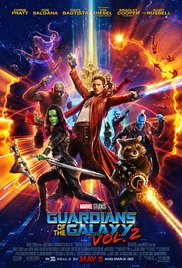
Guardians of the Galaxy Vol. 2

Guardians of the Galaxy Vol. 2
seen @ Cinemart Fiveplex, Forest Hills, Queens NY

For almost as long as I can remember, comic books have made me want to create a sci-fi epic. I've tried, more than once: As a kid, I made my initial foray into self-publishing comics. Among my attempts included a Fantastic Four-inspired yarn set in space. I did them strictly for myself. I made no attempt to reproduce them. That would come much later.

In recent years, I started (but never finished) a comic that was a SF remake of The Wizard of Oz (substitute a wormhole for a cyclone) and an SF graphic novel originally meant to be a pitch to Marvel until I changed the names and made it an original. I have a bad habit of not finishing stuff, which kinda irks me. That's why I'm so determined to complete my novel (almost two-thirds done as of this writing!).

Comics were great for these kinds of tales growing up. Post-Star Wars, the movies were starting to get a better handle on the special effects, costumes, sets, props and makeup necessary to create better alien worlds, ships and beings. Comics, however, could go anywhere and do anything, on a way smaller budget.


To a ten-year-old kid like I was, these four-color sagas blew my mind. They also fired my imagination, right around the time I began to discover my artistic ability. The fantastic worlds and strange dimensions depicted in comics made me want to create a few of my own.

Comics are still capable of going anywhere and doing anything, but these days, so are the movies. While watching Guardians of the Galaxy Vol. 2, I had to take a moment to, pardon the pun, marvel at what I was seeing: a talking raccoon with ray guns; a plant-like child alien; a godlike being and his heavenly home planet; a giant squid monster; sophisticated weapons and ships that move and function in ways that would've been impossible to depict thirty years ago.


Once, comics were the best at visualizing such things. Now, they're not only possible to create for the movies, they've practically become commonplace. I don't think we properly acknowledge this minor miracle enough. (I found it telling that the new Marvel Studios logo contains images from the Marvel movies instead of from the comics, like it used to.)

What does this mean for comics? Well, no one's stopped reading books because of the movies; I suspect the same will be true of comics. They still have their own unique properties - the comics theory books of Scott McCloud go into great detail about this - that should be emphasized if they're gonna move further in the 21st century. That's gonna mean way more than superheroes. But that's an argument for another day.


Director James Gunn wrote G2, as he did the first film. This feels a bit more like a Marvel Universe movie. Kurt Russell's character is one I never thought I'd see in a movie, because of its obscurity and its cosmic scale, but this is a franchise tailor made for both. Gunn found a way to not only bring him closer to human scale, but to tie him to the Guardians in a convenient way. In a series so eager to celebrate 70s/80s pop culture, casting Snake Plissken (and Sly Stallone too!) was a good call.

So what did Stephanie Zacharek think of G2? Previously, the film critic (now working for Time) sneered at "Fun! with a capital F" movies like Guardians. This time, sad to say, her opinion hasn't wavered: "[G2] feels not so much crafted as squirted from a tube.... This is a movie that praises viewers for being cool enough to show up and then proceeds to insult them - but only ironically, see?"


Needless to say, I did not feel insulted, ironically or otherwise, and neither did the audience I saw it with (who applauded at the end). G2 expands on the surrogate-family theme in the first film, contrasting it with conflicts within actual families. Granted, this is not unfamiliar territory, but it's all about execution. Gunn gives us enough human moments (for non-human characters!) in-between the humor to let us believe in these people and care about what happens to them. Special kudos go out to Michael Rooker, who was particularly dynamite here.


Then there's the songs. Zacharek says: "Freed from their original contexts and given flimsy new ones, if any, they toil in the service of a movie that's invested in little beyond smirking at its non jokes." I tend to agree with the part about the music. Outside of the song "Brandy" by Looking Glass, which plays a significant role, one does get a feeling the music's there in G2 because it's what we've come to expect now, not because it impacts the story in any way. This is always a risk when pop songs are a big part of your soundtrack. I would hope Gunn becomes more judicious in how he employs music in the future. Look at the way "Hello Stranger" is used in Moonlight and you'll know what I'm talking about.

Also, after a post-credit cameo in the last film, Howard the Duck makes another brief appearance in G2, a slightly longer one this time. Howard was a character from the 70s who was unique in that he had a very countercultural bent, reflecting the sensibilities of his creator, the late Steve Gerber. Unfortunately, he's remembered more these days for that awful George Lucas movie from the 80s. Could Marvel be setting us up for a Howard reboot - one in which he's done right? Sure seems possible!

Cinemart started screening G2 Thursday night, May 4, so I took advantage. Their renovation has continued; they upgraded their bathrooms, which was nice. Not that they were sub-par before, but this is better. I was dismayed to see, however, that their popcorn comes pre-salted, without a salt-free option. I sampled a really small bag. Couldn't taste the difference, but I won't eat it in the future, even if they are giving it away - which they were. Points off, but there's always candy. Perhaps they'll add healthier options to the menu in the future. I hope so.