Showing posts with label movie stars. Show all posts

Monday, March 8, 2021

Star Trek: City on the Edge of Forever

The Joan Collins Blogathon is an event dedicated to the life and career of the film and television actress, hosted by RealWeegieMidget Reviews. For a list of participating bloggers, visit the link at the host site.

Netflix viewing 

1930

Took the last bit of money I had to make it to New York and everything went to hell not long after. Stock market. The hell did I know about the stock market and whether or not it was gonna crash? If what the papers said was true, white folks’ greed got the best of them—and this time they done took the rest of the country down with them.

I lost my room on 123rd and spent the past few weeks living rough. For damn sure Harlem didn’t have no work to be found, so I headed downtown. Man, so many whites on the streets, with no place to go, lost, tired... It wasn’t just niggas feeling the hurt from this... “depression.” It was everybody. The whole damn world done turned wrong-way up and changed how we live.

And wasn’t no end in sight as far as I could see.

By the time I reached 21st Street Old Man Winter came and I had to get my black ass inside some kinda shelter before I froze. Don’t know what I would’ve done if that English lady at the mission hadn’t taken me in.

Sunday, December 6, 2020

Fourteen Hours

Crystal from In the Good Old Days of Classic Hollywood is seriously ill, according to her brother Jarrahn, and while a blogathon may seem unimportant in the face of that, Gill from RealWeegieMidget Reviews has agreed to take over in her absence. I don’t know Crystal well, but I know she’s a dedicated classic film fan whose blog has a strong following. Here’s hoping she recovers as soon as possible. Best wishes to her family.

Fourteen Hours

YouTube viewing 

Henry Hathaway tends to be associated with westerns, and indeed, some of his biggest hits as a director were in that vein: How the West Was Won, The Sons of Katie Elder, and of course, the original True Grit. A perusal of his IMDB page reveals a variety of movies, including war, film noir and drama. While he may not have had a clear signature style as a director, he was one of a number of Hollywood filmmakers from the Golden Age who turned out reliable product again and again; a go-to man.

A former assistant director during the silent era, he got his break in the early 30s making adaptations of Zane Grey westerns with Randolph Scott. In 1935, Lives of a Bengal Lancer with Gary Cooper got a Best Picture nomination and Hathaway was on the radar.

Saturday, December 5, 2020

Ray Massey in Hollywood (and England)

The What a Character Blogathon is an event devoted to the great character actors of classic Hollywood and the often memorable supporting roles they played throughout film history, hosted by Once Upon a ScreenOutspoken & Freckled, & Paula's Cinema Club. For a complete list of participating bloggers, visit the links at any of the host sites. 

Earlier this year, I watched the film A Matter of Life and Death and for the first time, I really noticed actor Raymond Massey. A supernatural drama in which the life of a British WW2 pilot is judged by an afterlife court, Massey plays the prosecutor, an American colonial. His character added a unique perspective to the story, and I found him quite convincing. Like all of the actors in this blogathon, he’s one of those people you saw a lot of in old movies and always liked, even if you never quite knew who they were.

The Toronto native was lured to acting after serving in the family tractor business in his youth and spent almost a decade on the British stage. In 1931 he came to Broadway in a production of Hamlet that didn’t go over well. Fortunately, though, by that time the movies had already came calling.

Monday, November 16, 2020

Topaze

The 2020 Barrymore Trilogy Blogathon is an event honoring the prolific Barrymore family of actors, especially the siblings John, Ethel and Lionel Barrymore, hosted by In the Good Old Days of Classic Hollywood. For a complete list of participating bloggers, visit the link at the host site.

Topaze

YouTube viewing 

The Barrymore clan of thespians dominated the American entertainment field more than any other family in the 20th century. The modern representative, Drew, is very much active; she currently has a daytime talk show on TV.

The clan goes back at least as far as the 19th century and possibly further than that—this article gives you an overview—but classic movie fans are perhaps most familiar with the triumvirate of siblings John, Ethel and Lionel. I’ve talked about Ethel before; for this year’s blogathon I’ll discuss John.

His father Maurice was a Broadway actor and a middleweight boxer, and was the first in the family to assume the stage name Barrymore (he was born Herbert Blythe), after English actor William Barrymore. John’s mother was also an actor, Georgiana Drew; the Drew name has also been handed down the generations. John was the youngest of their three children, after Lionel and Ethel.

Saturday, October 17, 2020

Love Among the Ruins

The Spencer Tracy & Katharine Hepburn Blogathon is an event celebrating the lives and careers of the famed Hollywood couple, presented by In the Good Old Days of Classic Hollywood  and Love Letters to Old Hollywood. For a complete list of participating bloggers, visit the links at the host sites.

YouTube viewing 

Katharine Hepburn made more TV movies than you might suspect for an actress whose film career began in 1932 and was almost as active in the theater throughout her life. 

Her migration to the small screen began after the death of Spencer Tracy in 1967, probably not a coincidence. All told, she made nine films for television, beginning with a remake of The Glass Menagerie in 1973 and ending with One Christmas in 1994, her final film role.

In 1972, Hepburn appeared on The Dick Cavett Show and was asked if she would ever make a film with Laurence Olivier, the legendary British actor who was so big they named an acting award after him. Hepburn smiled and said, “Well, neither of us is dead yet. Even though you may think so.”

And that set certain wheels in motion...

Thursday, October 15, 2020

A Lady Takes a Chance

The 120 Screwball Years of Jean Arthur Blogathon is an event celebrating the life and career of the actress, hosted by The Wonderful World of Cinema. For more information on participating bloggers, visit the link at the host site.

A Lady Takes a Chance

YouTube viewing 

Well, this movie sure has an unusual pairing: 30s romcom girl Jean Arthur, she of the squeaky voice and slightly-odd-but-still-cute looks, and John Wayne, on the verge of becoming the iconic superstar of the great John Ford westerns, together in a romantic comedy. Huh?

A Lady Takes a Chance realizes they’re an odd couple—from the perspective of a 21st century cinephile, she belongs with Jimmy Stewart and he belongs with Maureen O’Hara—but here they are. Can they believably fall in love with each other despite coming from not only different worlds but different genres?

The film begins with a message on title cards that has a surprising amount of resonance in 2020, a year that has made us all nostalgic for 2019:

“Once upon a time... It was so long ago that people drove sixty miles an hour, and skidded their tires, and drank three cups of coffee all at once, and ate big gobs of butter, and there were more fellows around than there were girls, and everybody was having a good time without knowing it, that’s when our story happened. Away back then... in 1938.

“And here’s hoping that ‘once upon a time’ goes on again some quick tomorrow. 

“Only better.”


Monday, September 28, 2020

In praise of the cartoon voice actors

If you’re a professional actor, voice acting for cartoons sounds easy, right? Just speak into the mike and do what you normally do. But for those who have made careers embodying animated characters on television, it can be almost as involving as live-action; certainly as meaningful. 

I’m gonna stick to TV for this post; I imagine many of us have at least a passing familiarity with the voice talents who originated in the movies: Clarence Nash, Pinto Colvig, Chuck Jones, Arthur Q. Bryan, Mel Blanc, Daws Butler, to name a few. And I’m only highlighting a few among many.

Alan Reed and Jean Vander Pyl voiced, among other characters, Fred and Wilma Flintstone. He got his start in radio, appearing in The Shadow, The Life of Riley, The Phil Harris-Alice Faye Show and Crime Doctor, as well as the movies (including Disney’s Lady and the Tramp) and early TV. She also started in radio, appearing in The Halls of Ivy and Father Knows Best, as well as TV. She was in the original Flintstones pilot, when the show was still called The Flagstones.

While Fred and Wilma were visually inspired by The Honeymooners’ Ralph and Alice Kramden, the voices were not. Fred had Ralph’s temper, but not his Brooklyn accent, while Wilma seemed a bit less sassy than Alice. Their voices fit their looks: Fred’s voice was heavy and earthy and Wilma’s was light and thin.


Saturday, September 26, 2020

Black Narcissus

The Rule Britannia Blogathon is an event celebrating British cinema, hosted by A Shroud of Thoughts. For a complete list of participating bloggers, visit the link at the host site.

Black Narcissus
YouTube viewing

Back in May we talked about the writer-director team of Powell and Pressburger, and I’m glad for the opportunity to discuss their movies again. They were beautifully made, with stunning cinematography and lush, vivid color.

If I ever saw Black Narcissus before, I don’t recall. All I knew about it was it had creepy-looking nuns doing nun stuff, but to be more specific: Deborah Kerr establishes a hospital and school with a group of her fellow nuns in the Himalayan mountains of India, but the atmosphere drives them all a little cuckoo. It’s based on a book.

Okay, first of all, I thought for sure that they shot this film on location somewhere in the Himalayas, but it was (mostly) done indoors! Specifically, it was shot in a studio with matte painting backgrounds, so perhaps we should talk about that.

Thursday, September 10, 2020

Filmation

Filmation cartoons were hit or miss for me. Often times, I liked the characters, but the actual animation could leave me cold. It never seemed as lively as it should have been—but there were some good moments.

The studio began in 1963 with three guys: Lou Scheimer, Hal Sutherland and Norm Prescott—and yes, the name is indeed a melding of film and animation, because they worked on both. Scheimer and Sutherland went back in television animation as far as 1957, and Prescott was a former disc jockey, if you can believe that, before getting into movie production.

In the company‘s early years, they did commercials, an Oz movie and some series pitches that never got far. Then DC Comics came to them wanting to adapt Superman and other heroes of theirs for animation, beginning in 1966. This led to series featuring Archie and Sabrina in 1970.

Saturday, August 29, 2020

Europa ‘51

The 2020 Wonderful Ingrid Bergman Blogathon is an event in tribute to the classic Hollywood actress, hosted by The Wonderful World of Cinema. For a complete list of participating bloggers, visit the link at the host site.

Europa ‘51 (AKA The Greatest Love)
YouTube viewing

Ingrid Bergman first met Roberto Rossellini in 1949. The Hollywood actress from Sweden was so impressed with the Italian director’s work she wrote to him, wanting to collaborate with him.

At this stage of her career, Bergman was a superstar, known for such films as Casablanca and Gaslight, plus her projects with Alfred Hitchcock, Notorious, Spellbound and Under Capricorn. Making a movie outside of the Hollywood bubble, with an unfamiliar foreign filmmaker, was a risk, but one she thought worth taking.

The result was the movie Stromboli, released a year later. In the process, the married Bergman had an affair with Rossellini, who was separated from his wife at the time. The actress and director had a son, who was born two weeks before the American release of the film... and that was around the time Bergman’s troubles really began.

Thursday, August 27, 2020

The UFO Incident

YouTube viewing

I first became aware of UFO sightings sometime in the mid-80s, and like many people, I dreamed of it happening to me one day. I still believe life of some form other than humanity is out there somewhere, but I suspect the odds of us finding it in our lifetimes is slim at best.

That doesn’t stop people from trying, of course. This 2018 New York article goes deep in re-examining UFO mythology in the age of DT and his proposed “space force.” 

If aliens exist, though, why would they abduct and experiment on humans? Do they see us as an inferior form of life? Possible—but I have a hard time imagining the popular image of little, skinny grey men with large, almond-shaped eyes and big heads (and no clothes) as genetically superior.

And at what point did this become the default image for “extraterrestrial,” anyway? (The emoji for “alien” on my iPhone is a simplified version of this.) It’s as if the same species were observing us for over half a century, and if that were so, at what point would they decide we actually are intelligent and talk to us? Or are they not as advanced as we thought? Could anal probes be their species’ equivalent of cow tipping? 

Regardless, the notion that aliens have nothing better to do than pick apart our insides persists—and one of the first widely-reported abduction stories was turned into an unusual and unsettling TV movie.

Thursday, August 13, 2020

The Autobiography of Miss Jane Pittman

The Autobiography of Miss Jane Pittman
YouTube viewing

In 1977, Roots held American television audiences in thrall like nothing had before by telling the truth about slavery. It was a true television event that opened up new levels of discussion about race relations and acknowledged how far black people have come and how far we still have to go.

Three years before that landmark, however, another television movie told a story about slavery that was not too different; in fact you could say it helped pave the way for Roots.

A novel was published in 1971 called The Autobiography of Miss Jane Pittman by Ernest J. Gaines, and I feel the need to emphasize it was a novel, a work of fiction. It references numerous real people, places and events throughout the 19th and 20th centuries, but it is fiction. CBS adapted it into a TV movie that aired in January 1974, with the teleplay by Tracy Keenan Wynn and directed by John Korty.

The star was Cicely Tyson.

Thursday, August 6, 2020

Thursday’s Game

Thursday’s Game (AKA The Berk)
YouTube viewing

With 21 Emmys and three Oscars, including Best Picture and Best Director, James L. Brooks is an undisputed legend of the big and small screens. Let’s count the hits he was involved in creating, shall we: The Mary Tyler Moore Show. Rhoda. Lou Grant. The Tracey Ullmann Show. And of course, The Simpsons—and that’s just TV.

Switch to the movies and you can add Terms of Endearment, Broadcast News and As Good As It Gets, all Best Picture nominees he directed and wrote. As a producer, you can even add Jerry Maguire, Say Anything and Big.

Before all of that, though, he was just a TV writer from Brooklyn working his way through the 60s. He had been a copywriter for CBS News, writing for broadcasts and documentaries as well as some work as an associate producer before switching to sitcoms, like That Girl, The Andy Griffith Show and My Three Sons. He created the show Room 222, the second one with a black lead character.

In 1970, he and Allan Burns created MTM. 29 Primetime Emmys later, it made him a major player in television. Here’s a nice appreciation of the show from TV Guide in the context of the pandemic.


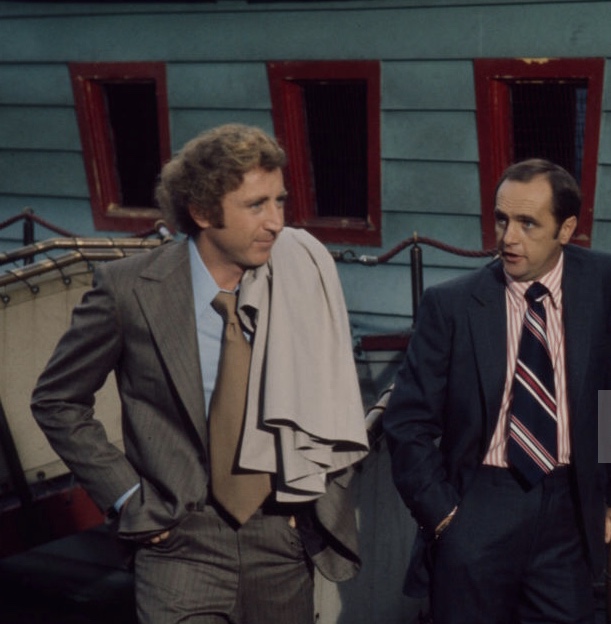
In 1971, Brooks tried his luck with a feature film. Thursday’s Game was an ABC movie that didn’t air until April 1974. Gene Wilder and Bob Newhart are two guys who enjoy a poker game with friends every Thursday night. When the game breaks up because of a fight and they need something new to do, Wilder and Newhart are forced to confront their inadequacies in life, especially when Wilder loses his job producing a crappy game show.

This all-star cast looks like a powerhouse now, but in 1971 many of them were not yet household names: Ellen Burstyn (two years before The Exorcist), MTM cast members Valerie Harper and Cloris Leachman, Rob Reiner (the same year All in the Family debuted), Norman Fell (five years before Three’s Company) Chris Sarandon (four years before Dog Day Afternoon) and Nancy Walker (same year as McMillan and Wife and three years before Rhoda, not to mention those Bounty commercials). By the time Game aired in 1974, some of these people were better known, including Brooks.

Game feels like the sort of thing the future creator of Terms of Endearment would write. It has its funny moments—Walker plays an unemployment agency counselor, and her scenes with Wilder are cute—mixed with a little drama: Wilder and Burstyn’s marriage is in jeopardy due in large part to his inability to admit he lost his job; he pretends his Thursday night poker game is still going on, but he actually stays out all night with Newhart, which naturally stresses her out. Game is less funny-ha-ha and more funny-ain’t-life-peculiar.


Steve at Movie Movie Blog Blog wrote about Game last year. I agree with him in that the poker scene in the beginning was a highlight and that nothing afterwards is quite as funny as that. The manic explosions Wilder was so great at are reined in and I admit, I kinda longed for more of them, but this isn’t that kind of movie. Indeed, at times Wilder looked like he was exploring his sexy side(?): he has a couple of shirtless scenes with Burstyn and Harper tries to seduce him in another scene. Young Frankenstein this is not.

I’d say Game is worth checking out overall, especially if you’re nostalgic for 70s television.

Tuesday, August 4, 2020

Trilogy of Terror

Trilogy of Terror
YouTube viewing

When I remember TV movies, I remember the epic mini-series of the 80s. They were trumpeted as a Big Deal in TV Guide and they usually had all-star casts, not that I would’ve heard of most of the names, but the point was they got my attention and I watched them, even if I was too young to completely understand what was going on.

As for the shorter, considerably less-than-epic ones, I think I understood even then that they were inferior to theatrical movies. I definitely remember The Day After and how that film stoked our nuclear apocalypse fears. When the Amy Fisher trial became popular, all three networks made TV movies about her! (I forget which one I watched.)

As kids, we also had the ABC Afterschool Specials: young adult melodramas about the issue of the week, usually starring some popular teen actor from television. Here’s a MeTV top ten list. I don’t remember any of these; I think I only watched them sporadically—why would I, when GI Joe and He-Man were on instead?

TV movies get a bad rep, it’s true, but back in the 70s, they aimed a little higher, had greater aspirations, and were more memorable overall. I’ve already discussed some of them, like The House That Would Not Die with Barbara Stanwyck, and Duel, the first feature film directed by Steven Spielberg. This month I’m gonna look at some more, and today we’ll begin with one that developed a huge cult following to become a pretty big hit thanks to a certain terrifying-looking doll.

Monday, July 27, 2020

Olivia


Let the rest of the world remember her for that tawdry Civil War melodrama. As far as I’m concerned, she’ll always be the great actress from The Heiress.

I first saw it in high school; we were studying the novel Washington Square, naturally, and I had no idea who she or anyone else in the picture was, but by the end I was mesmerized. I think it’s significant that I came into the movie with as few preconceptions as possible. I have since developed a bit of a resistance to period costume dramas; I’ve seen quite a few, both classic and contemporary, and some I’ve even liked, but I think it’s possible I’ve compared them to this in my mind and they’ve all fallen short.

Nothing can match the feeling of... awe I felt upon seeing this at a young and impressionable age, having no fixed ideas about period costume dramas or classic movies in general, and seeing this remarkable actress undergo an on-screen transformation from mousy girl to independent woman. And that ending has never left me in all the years since. Never.

I’ve seen her in other stuff since, of course. I’ve learned about her life off-screen, including her rivalry with her sister Joan Fontaine, not to mention the blow she struck for the rights of all Hollywood actors. That one movie, though, defines her to me more than anything else because of where and when I saw it.

The CNN obituary

Friday, July 24, 2020

Mondo Trasho

Mondo Trasho
YouTube viewing

It took fifty years or so, but the world has caught up with John Waters. Just turn on your TV and you’ll realize there can no longer be any doubt. Whether or not that’s a good thing, well, that’s up to you to decide... but I will say this:

As an artist, no matter who you are or where you come from, no matter what your intentions are—whether you wanna provoke or shock with your art or whether you wanna create beauty, however you perceive it, or whether you just wanna make a million dollars and retire to the south of France—you’re never, ever gonna please everybody, and attempting to try is an exercise in futility.

It’s something I wish I could remember more often. I struggle with the conservative mores I was brought up in, and at times I’ve wanted to push my art further, whether it’s my visual art or my writing, as I alluded to recently. To embrace “trash,” to find virtue in modes of expression that run far left of center and to be open about it, takes guts, because even in 2020, there’s gonna be somebody ready to hang you for it.

I suspect Waters realized this a long time ago.

Friday, July 17, 2020

Titanic (1953)

Blogathon. Stany. Pale Writer.

Titanic (1953)
YouTube viewing

Nine decks. 882 feet, nine inches long, 175 feet tall. Maximum speed, 23 knots—equal to 44 kilometers on land. Total passenger capacity, 2453, with luxuries including a seven-foot deep swimming pool, a gym, a library, a squash court, a Turkish bath and an a la carte restaurant.

They didn’t call that ship Titanic for nothing.

Even today, over a century later, the sinking of the massive British passenger liner still makes news. Back in January, an international agreement declared the wreckage would be left undisturbed, but in May, a federal judge gave the okay for a salvage mission to retrieve the ship’s Marconi wireless telegraphThe US is challenging this decision.

There are at least eighteen films about the Titanic in one form or another. You know about James Cameron’s version. You might know about the 1958 British film A Night to Remember. Do you know about Saved From the Titanic, the silent short film made a mere 29 days after the sinking in 1912, starring one of the actual survivors? Or, for that matter, the 1929 silent feature Atlantic, starring a young Madeleine Carroll?

Titanic movies have been around almost as long as the movies themselves.

Monday, July 13, 2020

The Wild Angels

The Wild Angels
YouTube viewing

Roger Corman is still alive and making movies! This Variety piece from last December discusses his latest projects and how he’s adapted to the technological changes to the industry—and even during the quarantine, he’s encouraged others to keep making movies.

To go into his career as an independent producer-writer-director, including discussing the many film superstars who started out with him when they were nobodies, would take way too long, so let’s focus on one aspect of it: his association with indie production company American International Pictures.

Founded by Samuel Arkoff & James Nicholson in 1954, their mandate was finding low-budget films that could be released as double features for the burgeoning teen market. Their first release was a Corman production, The Fast and the Furious. (Fun fact: Corman licensed that title to Universal in 2001, and when the long-running sports car franchise became a hit, Corman got a tiny piece of the profits.)

Corman had spent the 60s making adaptations of Edgar Allen Poe stories with Vincent Price and even spent a little time at Columbia Pictures. Then one day he became aware of motorcycles.

Monday, June 29, 2020

Harlem Rides the Range

Harlem Rides the Range
YouTube viewing

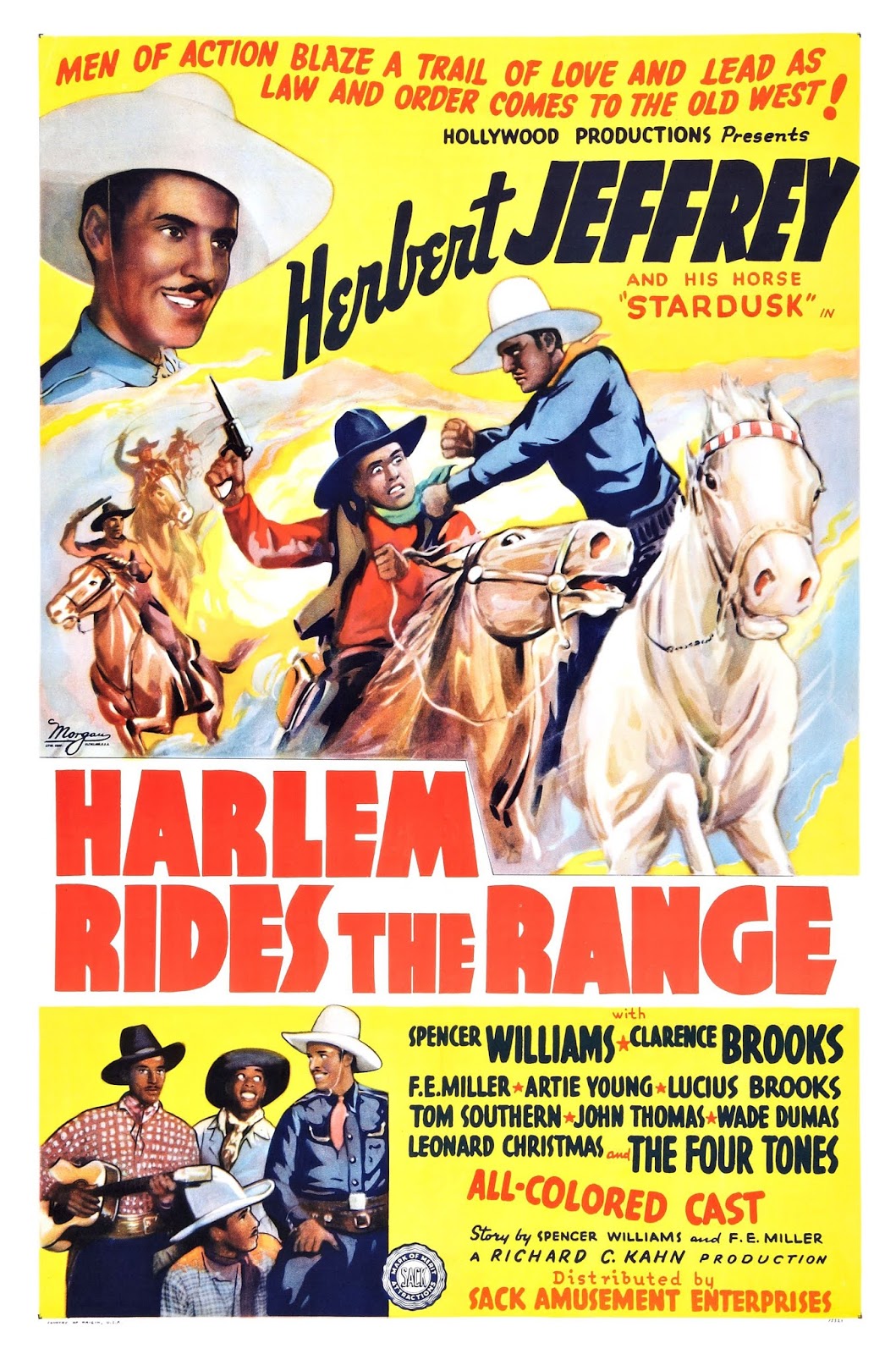
I really wanted to write about a black cowboy movie but thought I’d have to settle for one from the 70s or 80s. Then I came across this discovery: Herb Jeffries (AKA Herbert Jeffrey) was a singing cowboy from the 30s who starred in westerns with all-black casts.

He was very light-skinned (his mom was white) but identified as black. He started out as a singer in Detroit and moved to Chicago. In 1931 he joined Earl Hines’ band for a few years and then moved to LA in 1934. In time he became part of Duke Ellington’s band and lowered his vocal range to sound more like Bing Crosby.

While touring in the South with Hines, Jeffries experienced racism for the first time; the band could only play in tobacco warehouses and black-only theaters. When he saw black kids watching westerns, he decided they should have a black cowboy hero of their own.

He hooked up with producer Jed Buell, raised some money and wrote songs for the film. Jeffries had learned about horse riding on his grandfather’s farm, so he cast himself in the lead and used makeup to darken his skin.


Harlem on the Prairie was shot in five days in 1937 and though the critical reaction was mixed, it got a write-up in Time. “The Bronze Buckaroo” went on to make three more westerns, including the one I watched, Harlem Rides the Range, from 1939. I’m sorry to say it’s not very good; the acting is amateurish, the editing uninspired and there are only two songs in the hour-long movie.

That said, Jeffries was a good singer and the fact that his movies got made at all is an accomplishment in itself worth noting. He appeared in other non-western movies and television later in life, including an episode of The Virginian. A documentary short, A Colored Life, was made about him in 2008.


Saturday, June 27, 2020

Gene Autry vs. Roy Rogers

Singing cowboys (and cowgirls) have been around almost as long as sound in motion pictures. I can’t say I have much experience with them. I remember some of the country records my father listened to by self-styled cowboys—Marty Robbins, Freddy Fender, Tex Ritter—but as a kid, I never associated singing cowboys with the movies. I suppose my father must have watched singing cowboy movies growing up and then later, as an adult, but I don’t recall seeing any on TV.

If you had asked me back then, I would’ve said Gene Autry was the owner of the California Angels and Roy Rogers was the fast food restaurant. Even when I discovered who they were beyond those roles, I can’t say I cared much; westerns were what my parents watched. Now, many years later, as I re-examine westerns, it occurs to me that my education would be incomplete without a foray into the sub-genre of the western musical, and the two guys who dominated the field like oil rigs on the plains of Texas.

Here’s a top ten list of singing cowboys and cowgirls featuring some names you may not know. Here’s a history of the sub-genre, with a heavy focus on Autry and Rogers. With this post, I’m mostly interested in seeing their movies (and a bit of their TV shows) and seeing which one of them I like better. I realize I’m working from a small test sample, given the breadth of their careers, but I’m guessing their movies followed a formula and rarely strayed from that formula. My small sample will probably be enough.