The Anti-Damsel Blogathon salutes inspirational women filmmakers and characters throughout film history, hosted by Movies Silently and The Last Drive In. For a complete list of participating bloggers, visit the links at either site.
When I wrote about the film Sunset Boulevard, I had said that I used to think all silent film characters were like Norma Desmond, the iconic, fictitious movie star brought to life by Gloria Swanson. I might not have been too far off the mark when I wrote that. The nature of the medium at the time required its actors to use their whole bodies to communicate the action, in a manner that might seem melodramatic to one used to watching movies with sound. And in Sunset, Swanson speaks for everyone from that bygone era when she says things like "We didn't need dialogue. We had faces!"
Film history remembers Swanson primarily as a dramatic actress, a reputation cemented by the films she made with director Cecil B. DeMille, but is it possible she missed her calling as a comedienne? In looking at both types of silent films for this post, I found I liked her comedic chops much more. Later in life, Swanson said that she hated comedy at first, but over time, she realized that it taught her timing, which she credited as being the key to learning dramatic acting. That may be true, but I think she was better at it than perhaps she gave herself credit for.
For instance, I watched the DeMille-directed drama The Affairs of Anatol, which was generously provided to me on manufactured-on-demand DVD by the folks at Flicker Alley for this post and this blogathon. I thought it was more of a vehicle for the leading man, Wallace Reid. Swanson wasn't bad in it, though it was too easy to sympathize with her. All she had to do was be the aggrieved wife for most of the movie and look glamorous.
On the other hand, in looking at some of her comedy shorts - I watched The Sultan's Wife, Teddy at the Throttle and The Danger Girl - she's so much more fun to watch! While some of these shorts go so fast, it's hard to follow what's going on sometimes, Swanson herself is active, lively, and engaging. She and frequent co-star Bobby Vernon seem to have a bit of a Mickey-and-Judy vibe at times, but maybe that's just because they're both short.
Swanson was ambitious like few actors of her era. Someone like Mary Pickford was admired, and rightly so, for her business acumen as much as her acting ability, but with Swanson, it was a strong point of pride with her, one that she never bothered to conceal - and which rubbed some people the wrong way. In her book Silent Stars, author Jeanine Basinger quotes several industry magazines of the day who wrote about Swanson. This one, from Motion Picture in 1922, is notable for its stern analysis: "Her career, her work in the studio is as vital to her as the oxygen she breathes... She is beautiful, as flawlessly beautiful as a diamond - and as cold."
Swanson was unapologetic about her naked ambition: "I've always been my own business manager and agent. Mary Pickford had her mother, Chaplin had his brother, [Harold] Lloyd had his uncle, the Talmadges had [Joseph] Schenck, the Gishes, Griffith. I was always alone." Swanson chose to work with DeMille when she decided she had had enough of comedy and wanted more serious work, then left him for Famous Players/Lasky at Paramount when she thought DeMille crimped her style artistically and financially; she negotiated a contract which paid her $6500 a week, a sky-high figure for the time; and by 1926 she had formed her own production company, Gloria Swanson Inc. She did all of this while shaping and refining her public image on- and off-screen as an ultra-modern glamour girl with exquisite clothes - one who got married no less than five times.
Why did her career tank in the sound era? Who knows for certain? I watched a clip from one of her first talkies, a film called Tonight or Never, with Melvyn Douglas, and while it struck me as being really melodramatic, I thought she was good in it. Her voice was a little high, but she had marvelous chemistry with Douglas, and the tension in the scene is palpable. She could even sing. Her talkies just didn't click with audiences. Nor did her career flourish after Sunset, despite roles on Broadway and television. Still, there's no doubt that Sunset raised her profile and kept her in the public eye long afterwards. Check out this clip of her on The Dick Cavett Show from 1970 (with Janis Joplin as another guest!).
Swanson was a real film diva who reveled in the accolades and the glitz and the affluent lifestyle that came with the stardom. She may have inspired as much resentment as adoration, but it never fazed her, nor did it slow her down. A quote of hers that could have come from Norma Desmond says it all: "I have decided that when I am a star, I will be every inch and every moment the star! Everybody from the studio gateman to the highest executive will know it." And everybody did.
Next: Robert Wise
------------------------
Films with Gloria Swanson:
Sunset Boulevard
Previously in this series:
Jack Lemmon Jean Arthur
Edward G. Robinson Rita Moreno
Frank Capra Bernard Herrmann
Joan Blondell James Dean
Ethel Waters William Powell
Tod Browning Edith Head
Joel McCrea Thelma Ritter
Douglas Fairbanks
Sunday, August 16, 2015
Saturday, August 15, 2015
Number five is alive!
Five years of writing this blog? Doesn't seem possible! I know I keep saying every year at this time how I can't believe I got this far, but it's true - every time I think this is it, I'm not gonna be able to continue blogging, something inspires me to keep going. This year it's been the temporary format change. I know what it'll be next year... but I'm not ready to announce that yet.
Once again, thank you so much for reading, whether you've been with me from the beginning or just discovered WSW. And don't forget, post number 1,000 is due this fall! What'll it be? I'm still working on that...
Wednesday, August 12, 2015
Portrait of Jennie
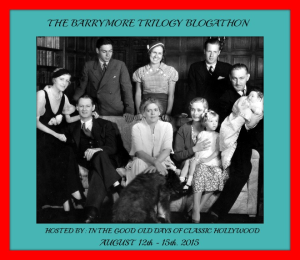
The Barrymore Trilogy Blogathon is an event devoted to the legacy of the Barrymore clan, one of the most prolific acting families in film and theater, hosted by In the Good Old Days of Classic Hollywood. For a complete list of participating bloggers, visit the link at the host site.
Portrait of Jennie
YouTube viewing
Anyone with a passing familiarity with Greek mythology will know who the Muses were: nine goddesses who brought the gift of inspiration to artistic minds. Surprisingly, there wasn't one for visual art which, as a visual artist myself, I find to be kind of a rip-off. I mean, it's not like there weren't painters and sculptors in ancient Greece, so what gives?
Throughout my life as an artist, of both words and pictures, there have been plenty of occasions in which people I've known have inspired my work. I'd say it's unavoidable. My high school girlfriend was the basis for several class assignments, as well as a bunch of sketchbook drawings. Years later, I did a graphic novella about a girl I was infatuated with that received superlative reviews. The first draft of the novel I'm writing had a character based on someone I knew from summer camp years ago, but I had to cut her from the story (which I'm still sad about).
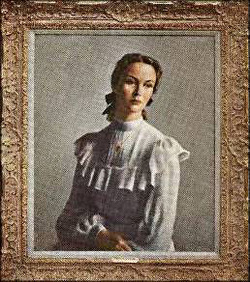
I didn't think about any of that when I watched Portrait of Jennie, surprisingly. I went into it virtually blind; I had a bare-bones idea of the premise and that was all. I thought it started off pretty cheesy, with the bombastic voice-over introduction and not one, but two epigraphs. I ended up liking it more than I thought I would, but I couldn't put my finger on why, not at first. It's a very old-fashioned romance, which I didn't expect - not that I'm necessarily against them in principle. Still, it wasn't until thinking about the movie afterwards that I realized why it struck a chord with me.
Joseph Cotten is a starving artist in New York City during the winter, who encounters a mysterious young girl who takes a shine to him, asking him to "wait" for her to grow up so they can be together. Thing is, though, she gets dramatically older each time he sees her, as if she's moving through time at a much faster rate. His obsession with her puts a jump-start to his struggling art career, but he's determined to find out more about her - like for instance, why she talks about people and places from a time long before she could have been born. Jennifer Jones plays her from adolescent to adult.
I once wrote about a girl who I fell for hard. I loved her, but it wasn't to be... and I've never really gotten over her since. As a result, I've since drawn lots of pictures of her: pencil sketches, inked pieces, in my sketchbooks, on tracing paper, on Bristol paper, dressed, naked (yep), in black and white, in color, in a wide variety of poses... you get the idea. I know how this sounds, but you gotta understand: I loved her, and I believe she loved me as well. She didn't leave me so much as fade from my life. That frustrated and depressed me, because for a moment I thought we had something that could've lasted. She got deep under my skin and I still haven't purged her from my system. I don't know if I ever will. And since I can't see her anymore, I draw her instead.
Cotten doesn't end up with Jones in Portrait, either, but like a muse, she inspired him to create a work of art that we're led to believe will endure (we see it in Technicolor at the very end), and the implication is that this is what matters more. I don't know if that's true. I don't see why he couldn't have had both, especially considering the lengths he went to in order to keep her. There is something nobly sad and romantic, in the truest sense of the word, about having true love within one's grasp and then losing it, but I think that's just something movies like this, as good as they are, tend to perpetuate. The reality is quite different, I assure you.
Okay, a few quick words about Ethel Barrymore, since this is a Barrymore blogathon. She plays an art dealer who becomes Cotten's patron. I liked her. I thought she befriended him because she fancied him, since he paid her a compliment when they first met. Still possible, I suppose - by her own admission, she's an "old maid" (Zod forbid she be simply an old woman instead), so that could play into what could be an infatuation for Cotten. It's not really a factor in the story, though.
Ethel was the sister of John and Lionel Barrymore, the offspring of stage actors, and the three of them were legends of film and especially theater, from the early part of the 20th century. Ethel was originally going to be a pianist, but she took up acting as well, debuting on the New York stage in 1894 and adding movies to her resume beginning in 1914. A four-time Oscar nominee, she won in Supporting Actress in 1945 for the film None But the Lonely Heart. (She also accepted Judy Holliday's Best Actress Oscar for Born Yesterday.) The Ethel Barrymore Theater here in NYC was built for her, during her lifetime, in 1928, and yes, she performed there. Drew Barrymore is her great-niece.
----------------------
Other Barrymore movies:
Pinky (Ethel)
Grand Hotel (John & Lionel)
Dinner at Eight (John & Lionel)
E.T. (Drew)
Scream (Drew)
Portrait of Jennie
YouTube viewing
Anyone with a passing familiarity with Greek mythology will know who the Muses were: nine goddesses who brought the gift of inspiration to artistic minds. Surprisingly, there wasn't one for visual art which, as a visual artist myself, I find to be kind of a rip-off. I mean, it's not like there weren't painters and sculptors in ancient Greece, so what gives?
Throughout my life as an artist, of both words and pictures, there have been plenty of occasions in which people I've known have inspired my work. I'd say it's unavoidable. My high school girlfriend was the basis for several class assignments, as well as a bunch of sketchbook drawings. Years later, I did a graphic novella about a girl I was infatuated with that received superlative reviews. The first draft of the novel I'm writing had a character based on someone I knew from summer camp years ago, but I had to cut her from the story (which I'm still sad about).
I didn't think about any of that when I watched Portrait of Jennie, surprisingly. I went into it virtually blind; I had a bare-bones idea of the premise and that was all. I thought it started off pretty cheesy, with the bombastic voice-over introduction and not one, but two epigraphs. I ended up liking it more than I thought I would, but I couldn't put my finger on why, not at first. It's a very old-fashioned romance, which I didn't expect - not that I'm necessarily against them in principle. Still, it wasn't until thinking about the movie afterwards that I realized why it struck a chord with me.
Joseph Cotten is a starving artist in New York City during the winter, who encounters a mysterious young girl who takes a shine to him, asking him to "wait" for her to grow up so they can be together. Thing is, though, she gets dramatically older each time he sees her, as if she's moving through time at a much faster rate. His obsession with her puts a jump-start to his struggling art career, but he's determined to find out more about her - like for instance, why she talks about people and places from a time long before she could have been born. Jennifer Jones plays her from adolescent to adult.
I once wrote about a girl who I fell for hard. I loved her, but it wasn't to be... and I've never really gotten over her since. As a result, I've since drawn lots of pictures of her: pencil sketches, inked pieces, in my sketchbooks, on tracing paper, on Bristol paper, dressed, naked (yep), in black and white, in color, in a wide variety of poses... you get the idea. I know how this sounds, but you gotta understand: I loved her, and I believe she loved me as well. She didn't leave me so much as fade from my life. That frustrated and depressed me, because for a moment I thought we had something that could've lasted. She got deep under my skin and I still haven't purged her from my system. I don't know if I ever will. And since I can't see her anymore, I draw her instead.
Cotten doesn't end up with Jones in Portrait, either, but like a muse, she inspired him to create a work of art that we're led to believe will endure (we see it in Technicolor at the very end), and the implication is that this is what matters more. I don't know if that's true. I don't see why he couldn't have had both, especially considering the lengths he went to in order to keep her. There is something nobly sad and romantic, in the truest sense of the word, about having true love within one's grasp and then losing it, but I think that's just something movies like this, as good as they are, tend to perpetuate. The reality is quite different, I assure you.
Okay, a few quick words about Ethel Barrymore, since this is a Barrymore blogathon. She plays an art dealer who becomes Cotten's patron. I liked her. I thought she befriended him because she fancied him, since he paid her a compliment when they first met. Still possible, I suppose - by her own admission, she's an "old maid" (Zod forbid she be simply an old woman instead), so that could play into what could be an infatuation for Cotten. It's not really a factor in the story, though.
Ethel was the sister of John and Lionel Barrymore, the offspring of stage actors, and the three of them were legends of film and especially theater, from the early part of the 20th century. Ethel was originally going to be a pianist, but she took up acting as well, debuting on the New York stage in 1894 and adding movies to her resume beginning in 1914. A four-time Oscar nominee, she won in Supporting Actress in 1945 for the film None But the Lonely Heart. (She also accepted Judy Holliday's Best Actress Oscar for Born Yesterday.) The Ethel Barrymore Theater here in NYC was built for her, during her lifetime, in 1928, and yes, she performed there. Drew Barrymore is her great-niece.
----------------------
Other Barrymore movies:
Pinky (Ethel)
Grand Hotel (John & Lionel)
Dinner at Eight (John & Lionel)
E.T. (Drew)
Scream (Drew)
Monday, August 10, 2015
Books: The Black Cat
The 2015 Summer Reading Classic Film Book Challenge is an event in which the goal is to read and write about a variety of books related to classic film, hosted by Out of the Past. For a complete list of the rules, visit the website.
The IMDB page for Edgar Allan Poe is much bigger than one would think. The 19th-century writer's work has never gone out of style when it comes to the movies, it seems, both foreign and domestic - whether it's direct adaptations of his stories or films "inspired by" him and his legend.
One of his more popular tales which have been filmed time and again is The Black Cat. I have it in a collection of Poe material called The Tell-Tale Heart and Other Writings, published by Bantam. I bought it a long time ago, possibly back in college during my "must read as many classics as possible" phase. In the summer of 1995, I was a camp counselor, and I remember wanting to bring it with me, as they would make for some great scary stories to tell around the campfire late at night, but it wasn't allowed. A missed opportunity, if you ask me.
The Black Cat runs a grand total of ten pages in my Poe collection. It's about an alcoholic animal lover dude who takes his frustrations out on his pet cat - an act that comes back to haunt him, Twilight Zone-style. Victorian-era literature in general was very flowery and verbose, but in Poe's hands, it's wedded with a Hitchcockian level of dread and paranoia that even today, over 150 years after his death, still has the power to shock and unsettle:
There are at least four different films inspired by The Black Cat. In keeping with the classic film mandate of this blogathon, I'm gonna talk about three.
Perhaps the best known version is the one from 1934, directed by Edgar G. Ulmer and starring the Lennon and McCartney of horror, Bela Lugosi and Boris Karloff, in the first of their eight films together. It's absolutely nothing like the original story at all, with characters that don't appear in the book and an entirely different plot that just happens to have in it a black cat - one which doesn't figure that heavily into the story at all. That said, the movie itself, which I watched for this post, isn't bad, though I thought it dragged in places. It doesn't get really good until the final fifteen minutes.
Seven years later, Hollywood went back to the well for another "interpretation" of Poe's short story that has nothing to do with the actual story, only this time it was for laughs! The ensemble cast was led by none other than Basil Rathbone, caught up in a very different kind of mystery than what he was used to as Sherlock Holmes, and also included Lugosi in a bit part as an Italian groundskeeper. Stop me if you've heard this one before: a family gathers in an old dark house to hear the will reading by their cat-loving matriarch, but she dies prematurely and suddenly everyone's a suspect. While it's not very well regarded overall, here's a somewhat favorable review.
So didn't anybody make a film based on the actual Poe story? Well, yes, someone did: in 1966, a guy named Harold Hoffman adapted and directed a Black Cat film that, based on this trailer, looks like a contemporary, 20th-century version of Poe's tale. Unfortunately, it didn't exactly set the world on fire. Too bad. The Black Cat is a good psychological horror story. Hopefully somebody, someday, will give it the film adaptation it deserves.
-----------------------
Previously:
Scandalous
Ernst Lubitsch: Laughter in Paradise
Five Came Back
The IMDB page for Edgar Allan Poe is much bigger than one would think. The 19th-century writer's work has never gone out of style when it comes to the movies, it seems, both foreign and domestic - whether it's direct adaptations of his stories or films "inspired by" him and his legend.
![]() |
| Edgar Allan Poe |
The Black Cat runs a grand total of ten pages in my Poe collection. It's about an alcoholic animal lover dude who takes his frustrations out on his pet cat - an act that comes back to haunt him, Twilight Zone-style. Victorian-era literature in general was very flowery and verbose, but in Poe's hands, it's wedded with a Hitchcockian level of dread and paranoia that even today, over 150 years after his death, still has the power to shock and unsettle:
... And then came, as if to my final and irrevocable overthrow, the spirit of PERVERSENESS. Of this spirit philosophy takes no account. Yet I am not more sure that my soul lives, than I am that perverseness is one of the primitive impulses of the human heart - one of the indivisible primary faculties, or sentiments, which give direction to the character of Man. Who has not, a hundred times, found himself committing a vile or a silly action, for no other reason than because he knows he should not? Have we not a perpetual inclination, in the teeth of our best judgment, to violate that which is Law, merely because we understand it to be such? This spirit of perverseness, I say, came to my final overthrow.
![]() |
| Bela Lugosi and Boris Karloff in Black Cat '34 |
Perhaps the best known version is the one from 1934, directed by Edgar G. Ulmer and starring the Lennon and McCartney of horror, Bela Lugosi and Boris Karloff, in the first of their eight films together. It's absolutely nothing like the original story at all, with characters that don't appear in the book and an entirely different plot that just happens to have in it a black cat - one which doesn't figure that heavily into the story at all. That said, the movie itself, which I watched for this post, isn't bad, though I thought it dragged in places. It doesn't get really good until the final fifteen minutes.
![]() |
| Basil Rathbone, Gale Sondergaard and Broderick Crawford from Black Cat '41 |
So didn't anybody make a film based on the actual Poe story? Well, yes, someone did: in 1966, a guy named Harold Hoffman adapted and directed a Black Cat film that, based on this trailer, looks like a contemporary, 20th-century version of Poe's tale. Unfortunately, it didn't exactly set the world on fire. Too bad. The Black Cat is a good psychological horror story. Hopefully somebody, someday, will give it the film adaptation it deserves.
-----------------------
Previously:
Scandalous
Ernst Lubitsch: Laughter in Paradise
Five Came Back
Thursday, August 6, 2015
Douglas Fairbanks
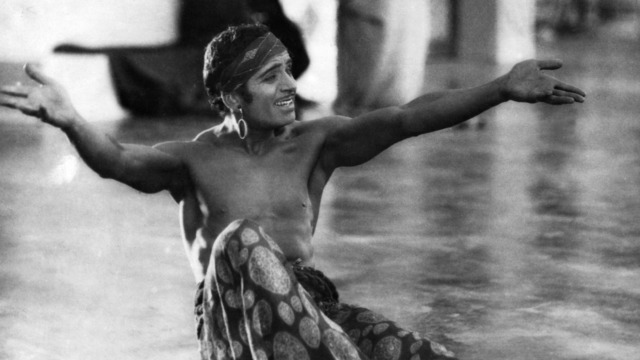
By way of a for-instance, I watched The Mark of Zorro in preparation for this post, and he brings much of the same joie de vivre here that he did in the first movie I saw him in, The Thief of Bagdad: lots of jumping around and running in the fight scenes, as well as his laughing, devil-may-care attitude. You can't help but find it infectious.
Fairbanks' marriage to Mary Pickford made for one of the first Hollywood tabloid romances. They met in 1916, at a party. At the time, Fairbanks was married to a chick named Anna Beth Sully, the daughter of an industrialist, and Pickford was married to actor Owen Moore. (Why is it that the best known Hollywood romances were born of extramarital affairs?) Douglas Jr., who enjoyed a long career in film also, was the result of Douglas Sr.'s marriage to Sully. Fairbanks and Pickford's affair was on the down low for several years. Fairbanks got his divorce in 1919, and Pickford got hers the year after that. By the time the two of them married each other weeks later, they were among the highest paid actors in the industry.
In Jeanine Basinger's book Silent Stars (yes, I'm quoting from it again), she writes about their month-long European honeymoon and the reception they got from their fans in England:
...At an outdoor benefit in Kensington Gardens, Mary and Doug arrived seated in the back of an open Rolls-Royce, and as the crowds surged forward, Mary was grabbed and pulled out of the car. Doug managed to rescue her by clutching her by the ankles, but when they were finally able to step out, the crowds again closed in around them "like quicksand," [quoting Pickford's account] and she had to be carried on Doug's shoulders to keep from being crushed. On the Continent, the mobs did not diminish. "I spent my honeymoon on a balcony waving to crowds," Mary said.
![]() |
| Fairbanks, with Mary Pickford |
Can I talk for a minute about Fairbanks' tan? He made Cary Grant look pale! Just look at some of these photos of the man and you'll see what I'm talking about. He almost looks black! - and it's not like tanning was the hip thing to do, as it would later become.
Basinger also talks about Fairbanks as the model physical specimen:
...He has the kind of physical radiance that is usually associated with female performers, although he is quintessentially masculine. He has it. Sometimes he reminds me of the equally exuberant Al Jolson of The Jazz Singer, Mammy, and The Singing Fool. Like Jolson, he jumps around gracefully, swinging his arms, making broad gestures. He seems about to erupt into song but, unlike Jolson, he erupts by leaping up onto something.... Everything he did to "act" was physical - the word most commonly used to describe his performances at the time was "exuberant" - and this acting style was perfect for silent films because it was all about using the whole body to express character, attitude, and emotion.Fairbanks made a few talkies. How was his speaking voice? I watched a few scenes from a film of his from 1932 called Mr. Robinson Crusoe. His voice was a little higher than I imagined, not that I thought it'd be all that deep. Fairbanks wasn't a ripped, chiseled Adonis like Chris Evans or Hugh Jackman or Channing Tatum, but he was in great enough shape that I suppose I expected he'd have a voice that reflected his physical prowess. In Crusoe, at least, his voice may not be deep, but it's loud. He certainly had no trouble projecting!
Fairbanks was a true original. Looking at his movies, you can see why the medium took off as quickly and as successfully as it did. Modern action movie stars could learn a thing or two from him.
Next: Gloria Swanson
------------------------
Films with Douglas Fairbanks:
The Thief of Bagdad
Previously:
Jack Lemmon Jean Arthur
Edward G. Robinson Rita Moreno
Frank Capra Bernard Herrmann
Joan Blondell James Dean
Ethel Waters William Powell
Tod Browning Edith Head
Joel McCrea Thelma Ritter
Monday, August 3, 2015
Life With Father
Life With Father
TCM viewing
There's a saying that there are no atheists in foxholes. It means that when the stakes are life and death, people are more likely to turn to God for comfort. That might have been true once, back when humans knew little about the world and their place in it, but times have changed, and besides, not everybody worships God in the same way - or at all.
William Powell's character in Life With Father isn't an atheist, but he might be the closest thing to one I've ever seen in a studio-era, Old Hollywood movie which, strictly speaking, isn't that close. It puts him in the ballpark, but he's in the last row of the upper deck in the left field seats. Still, it's surprising how sympathetically he's portrayed.
Powell plays a Teddy Roosevelt-esque patriarch of a turn-of-the-century New York family. Irene Dunne is his devout Episcopalian wife. Powell's character, Clarence Sr., explicitly states that his parents were "freethinkers" (a label often used interchangeably with "atheist") and that they let him decide whether to choose a religious faith or not. He identifies as a Christian, and for the sake of his wife Vinnie (? I guess that's short for something), he attends weekly services with the rest of the family, but he makes it clear that he wishes to worship in his own way, without any undue impositions - such as kneeling.
One of the plot threads in this ensemble comedy involves Vinnie attempting to get her husband baptized so he'll be ensured a seat in heaven. She gets sick at one point, and Clarence, desperate to see his wife get better, entreats God for help, promising he'll get baptized if Vinnie recuperates. (The way he does it is both funny and poignant, bossing God around with his brand of bluster, as if He were one of the many maids Clarence goes through in the story - one more employee not living up to his exacting demands.) She does recover, and he is forced to make good on his promise, though not before a lot of kicking and screaming.
I've never been in a relationship in which this type of incompatibility was a problem, but I think what we should take away from this situation is not anything along the lines of "The Lord worked through Clarence and changed his heart," because at the movie's end, when he's on his way to get baptized, he's still as cantankerous about keeping his promise as he was before, and there's no indication that he has or will become as devout as Vinnie. Rather, I think this speaks more to Clarence's love for his wife - a love that is able to overcome their religious differences.
Clarence and Vinnie seem like a happy couple, despite their occasional bickering, but locked as they are within their societal gender roles, they don't appear to have a great deal in common. The great joke that runs throughout the movie is that he struts and preens around like he's the lord and master of the house, but he's really wrapped around Vinnie's finger, which is consistent with the change of heart he has about getting baptized.
We don't get a strong sense, however, of where their love for each other comes from. What would make a man like Clarence fall in love with a woman like Vinnie, and make the compromises he has made in his life to accommodate her, such as raising their children within her faith? (We see one of the younger sons practice reciting a catechism, but of course, there's no indication that he understands the deeper, underlying meaning behind the words, nor is any required. I wonder how Clarence feels about that, given his upbringing.) He says something about how lonely he gets without her around, but I suspect there's more to it than that, and I would've like to have seen this explored a little deeper.
So guess who recommended this one? Father is based on a true story, written as a memoir by Clarence Sr.'s son, Clarence Day Jr., which was adapted as a play. Powell earned his third Oscar nomination, and the film led to a short-lived TV show as well. Maybe it was because it was filmed in Technicolor, but the movie reminded me of Meet Me in St. Louis, another color film about a turn-of-the-century family with a red-headed lead character. Indeed, there were lots of moments where I anticipated the characters about to break into song!
The film begins in a unique way, with what looks like a primitive View-Master (anyone else remember those? I used to love playing with them growing up - and they still make them!) showing "slides" of 19th-century New York. No one in the film actually uses this thingamagig, but as a method of easing us into the world of the Day family, it's quite an original touch on director Michael Curtiz' part.
I also loved the way Powell's character is set up. We begin with seeing people on the street talking about Clarence Sr.; we follow the latest in a series of new maids as she's initiated into the Day household, eager to make a good impression on the boss; then we see the family, one at a time, beginning with Dunne's Vinnie. At one point we hear Powell but all we see of him is his shadow at the top of the stairway - very clever! Once all the other family members have taken the "stage," then we finally see Powell.
This may be based on a true story, but I find it hard to believe that the entire Day family were redheads. The maid makes this peculiar hand gesture each time she sees the Day children, redheaded boys all, as if warding off evil spirits. I can only assume that this must have been an aspect of some old-fashioned prejudice. It's never explained. I've known only a few (natural) redheads in my life. The one that sticks out in my mind most is this friend named Michelle that I knew in junior high. Her red hair was short and thick, as I recall. She was very funny, and fairly popular. I have a memory of her singing silly songs from the back of the bus during a school trip. I still think about her every once in awhile.
TCM viewing
There's a saying that there are no atheists in foxholes. It means that when the stakes are life and death, people are more likely to turn to God for comfort. That might have been true once, back when humans knew little about the world and their place in it, but times have changed, and besides, not everybody worships God in the same way - or at all.
William Powell's character in Life With Father isn't an atheist, but he might be the closest thing to one I've ever seen in a studio-era, Old Hollywood movie which, strictly speaking, isn't that close. It puts him in the ballpark, but he's in the last row of the upper deck in the left field seats. Still, it's surprising how sympathetically he's portrayed.
Powell plays a Teddy Roosevelt-esque patriarch of a turn-of-the-century New York family. Irene Dunne is his devout Episcopalian wife. Powell's character, Clarence Sr., explicitly states that his parents were "freethinkers" (a label often used interchangeably with "atheist") and that they let him decide whether to choose a religious faith or not. He identifies as a Christian, and for the sake of his wife Vinnie (? I guess that's short for something), he attends weekly services with the rest of the family, but he makes it clear that he wishes to worship in his own way, without any undue impositions - such as kneeling.
One of the plot threads in this ensemble comedy involves Vinnie attempting to get her husband baptized so he'll be ensured a seat in heaven. She gets sick at one point, and Clarence, desperate to see his wife get better, entreats God for help, promising he'll get baptized if Vinnie recuperates. (The way he does it is both funny and poignant, bossing God around with his brand of bluster, as if He were one of the many maids Clarence goes through in the story - one more employee not living up to his exacting demands.) She does recover, and he is forced to make good on his promise, though not before a lot of kicking and screaming.
I've never been in a relationship in which this type of incompatibility was a problem, but I think what we should take away from this situation is not anything along the lines of "The Lord worked through Clarence and changed his heart," because at the movie's end, when he's on his way to get baptized, he's still as cantankerous about keeping his promise as he was before, and there's no indication that he has or will become as devout as Vinnie. Rather, I think this speaks more to Clarence's love for his wife - a love that is able to overcome their religious differences.
Clarence and Vinnie seem like a happy couple, despite their occasional bickering, but locked as they are within their societal gender roles, they don't appear to have a great deal in common. The great joke that runs throughout the movie is that he struts and preens around like he's the lord and master of the house, but he's really wrapped around Vinnie's finger, which is consistent with the change of heart he has about getting baptized.
We don't get a strong sense, however, of where their love for each other comes from. What would make a man like Clarence fall in love with a woman like Vinnie, and make the compromises he has made in his life to accommodate her, such as raising their children within her faith? (We see one of the younger sons practice reciting a catechism, but of course, there's no indication that he understands the deeper, underlying meaning behind the words, nor is any required. I wonder how Clarence feels about that, given his upbringing.) He says something about how lonely he gets without her around, but I suspect there's more to it than that, and I would've like to have seen this explored a little deeper.
So guess who recommended this one? Father is based on a true story, written as a memoir by Clarence Sr.'s son, Clarence Day Jr., which was adapted as a play. Powell earned his third Oscar nomination, and the film led to a short-lived TV show as well. Maybe it was because it was filmed in Technicolor, but the movie reminded me of Meet Me in St. Louis, another color film about a turn-of-the-century family with a red-headed lead character. Indeed, there were lots of moments where I anticipated the characters about to break into song!
The film begins in a unique way, with what looks like a primitive View-Master (anyone else remember those? I used to love playing with them growing up - and they still make them!) showing "slides" of 19th-century New York. No one in the film actually uses this thingamagig, but as a method of easing us into the world of the Day family, it's quite an original touch on director Michael Curtiz' part.
I also loved the way Powell's character is set up. We begin with seeing people on the street talking about Clarence Sr.; we follow the latest in a series of new maids as she's initiated into the Day household, eager to make a good impression on the boss; then we see the family, one at a time, beginning with Dunne's Vinnie. At one point we hear Powell but all we see of him is his shadow at the top of the stairway - very clever! Once all the other family members have taken the "stage," then we finally see Powell.
This may be based on a true story, but I find it hard to believe that the entire Day family were redheads. The maid makes this peculiar hand gesture each time she sees the Day children, redheaded boys all, as if warding off evil spirits. I can only assume that this must have been an aspect of some old-fashioned prejudice. It's never explained. I've known only a few (natural) redheads in my life. The one that sticks out in my mind most is this friend named Michelle that I knew in junior high. Her red hair was short and thick, as I recall. She was very funny, and fairly popular. I have a memory of her singing silly songs from the back of the bus during a school trip. I still think about her every once in awhile.
Saturday, August 1, 2015
Ain't no cure for the summertime links
The second half of The One Year Switch has gotten off to a slower start than anticipated; there's been a bit of a drop-off in pageviews over the past few weeks, but I'm betting that'll turn around this month. I've got three more blogathon posts, plus a return to the #TCMparty. If you look at the sidebar, you'll see that the film I've decided on is the Marx Brothers' Monkey Business, which airs August 14. I don't think I've seen this one, but it is the Marx Brothers, so I imagine one knows what to expect.
Yes, I know I've gone off my tentative Mon-Wed-Fri schedule. It was nice to actually have a schedule again - I had forgotten what it was like! - but the truth is that I had overbooked for August and I needed some breathing room. Also, some rainouts ruined my plans for some outdoor movies. What can you do? I expect to return to three posts a week soon.
I haven't seen very many new movies so far this year. Then again, I haven't paid as much attention to what's new, since my focus has been on the old stuff. I know Spy was a big hit, for one thing, and Ant-Man is doing well, too (another Marvel movie that looked like less than a sure thing on paper). I had thought Batman v. Superman was coming out this year, but it's actually due next year. Must've missed the announcement of the change. I was supposed to see Woody Allen's Irrational Man with friends, but I had to cancel at the last minute because I had to attend my writers group. The other co-captains couldn't make it, so I had to be there to run things.
Did I mention I've become one of the leaders of my writers group? It happened a couple of months ago - I replaced this girl who had to shift down to being a part-timer because of outside commitments. I had filled in as an organizer a couple of times when the others couldn't make it, and while I certainly wasn't campaigning for the job, it made me a viable choice when circumstances in the group changed. I try and be as low-key and laid-back as I can about the job. The regulars know the weekly routine, and they help initiate the newbies as well. There is a commitment on the part of a number of people to actually show up and critique each other's work, which is good. It makes me want to be a part of things.
Your links for this month:
Le takes a comprehensive look at the year 1928 in film. With maps! (Google Translate required.)
Raquel speaks! On video, that is, about her film books.
Will found a comics artist who made posters of classic film stars in superhero movies.
Why does Aurora like Bruce Lee? (Total coincidence that he's on the banner for this month!)
Only tangentially related to movies, but what the heck: Jennifer had a speaking engagement in which she talked about Harper Lee.
Bugs Bunny turned 75.
How do we appreciate the work of Bill Cosby now?
When roller disco movies were a thing, featuring a movie I've always been curious about: Linda Blair's Roller Boogie.
Yes, I know I've gone off my tentative Mon-Wed-Fri schedule. It was nice to actually have a schedule again - I had forgotten what it was like! - but the truth is that I had overbooked for August and I needed some breathing room. Also, some rainouts ruined my plans for some outdoor movies. What can you do? I expect to return to three posts a week soon.
I haven't seen very many new movies so far this year. Then again, I haven't paid as much attention to what's new, since my focus has been on the old stuff. I know Spy was a big hit, for one thing, and Ant-Man is doing well, too (another Marvel movie that looked like less than a sure thing on paper). I had thought Batman v. Superman was coming out this year, but it's actually due next year. Must've missed the announcement of the change. I was supposed to see Woody Allen's Irrational Man with friends, but I had to cancel at the last minute because I had to attend my writers group. The other co-captains couldn't make it, so I had to be there to run things.
Did I mention I've become one of the leaders of my writers group? It happened a couple of months ago - I replaced this girl who had to shift down to being a part-timer because of outside commitments. I had filled in as an organizer a couple of times when the others couldn't make it, and while I certainly wasn't campaigning for the job, it made me a viable choice when circumstances in the group changed. I try and be as low-key and laid-back as I can about the job. The regulars know the weekly routine, and they help initiate the newbies as well. There is a commitment on the part of a number of people to actually show up and critique each other's work, which is good. It makes me want to be a part of things.
Your links for this month:
Le takes a comprehensive look at the year 1928 in film. With maps! (Google Translate required.)
Raquel speaks! On video, that is, about her film books.
Will found a comics artist who made posters of classic film stars in superhero movies.
Why does Aurora like Bruce Lee? (Total coincidence that he's on the banner for this month!)
Only tangentially related to movies, but what the heck: Jennifer had a speaking engagement in which she talked about Harper Lee.
Bugs Bunny turned 75.
How do we appreciate the work of Bill Cosby now?
When roller disco movies were a thing, featuring a movie I've always been curious about: Linda Blair's Roller Boogie.
Subscribe to:
Posts (Atom)