The Girl Most Likely To...
YouTube viewing
Joan Rivers might have been the first female stand-up comic I had ever seen. I had seen comedic actresses on TV—Carol Burnett, Isabel Sanford, Nell Carter—but I associated Rivers with stand-up. I would see quite a bit of her on TV, and she was part of the zeitgeist at the time.
I thought she was funny, not so much for the things she said as for the way she acted: gossipy, manic, catty. It’s a safe bet I knew no one in real life remotely like her.
In 2010 there was a documentary on her, Joan Rivers: A Piece of Work. It provided insight on where she came from and how her distinctive brand of humor originated. I remember she said in the doc, and I’m paraphrasing, something about how “ugly” women made better comediennes. I suspect she was making a distinction from comedic actresses, because we can all think of beautiful examples of those: Carole Lombard, Rosalind Russell, Madeline Kahn.
If this were true, was it a form of compensation? Tina Fey is good looking, no doubt. Would I call her sexy? The word can mean different things to different people. I wouldn’t kick her out of my bed; I think she’d be a lot of fun to be with and would have lots of interesting things to say, and that’s sexy, in its own way. But I think we all know what Rivers was referring to: objective physical beauty.
Tuesday, August 11, 2020
Saturday, August 8, 2020
Television: Alfred Hitchcock Presents
The Alfred Hitchcock Blogathon is an event dedicated to the life and career of the legendary filmmaker, hosted by Maddy Loves Her Classic Films. For a complete list of participating bloggers, visit the link at the host site.
Good evening.
Perhaps more than any other director of the Golden Age, Alfred Hitchcock was a personality, someone known by movie audiences as well as any movie star, and never was that more apparent than when he made the leap to television in 1955 with Alfred Hitchcock Presents, AKA The Alfred Hitchcock Hour.
A weekly anthology of suspense and horror stories, it’s notable not just for the quality of the stories but for how it shaped the Hitchcock persona. His droll sense of deadpan humor was often on display in his movies, sometimes as part of the cameo appearances he’d make in them. For TV, it was like he became an eccentric uncle with whom you were never sure if he was pulling your leg or not.
His introductions to each episode painted him as macabre yet self-depreciating, with a dry wit and a strong sense of the absurd, much like The Addams Family years later. The creepy theme song and the stylized cartoon silhouette of him also helped sell him as an iconic persona that one looked forward to seeing as much as the stories themselves. Here’s a collection of some of his more memorable intros and outros and here are some fun facts about the show.
So nothing fancy here; just my take on a few episodes picked at random. I didn’t realize when I began planning for this post AHP (a half hour) was a little different from AHH (an hour), though it’s all basically the same show.
Good evening.
Perhaps more than any other director of the Golden Age, Alfred Hitchcock was a personality, someone known by movie audiences as well as any movie star, and never was that more apparent than when he made the leap to television in 1955 with Alfred Hitchcock Presents, AKA The Alfred Hitchcock Hour.
A weekly anthology of suspense and horror stories, it’s notable not just for the quality of the stories but for how it shaped the Hitchcock persona. His droll sense of deadpan humor was often on display in his movies, sometimes as part of the cameo appearances he’d make in them. For TV, it was like he became an eccentric uncle with whom you were never sure if he was pulling your leg or not.
His introductions to each episode painted him as macabre yet self-depreciating, with a dry wit and a strong sense of the absurd, much like The Addams Family years later. The creepy theme song and the stylized cartoon silhouette of him also helped sell him as an iconic persona that one looked forward to seeing as much as the stories themselves. Here’s a collection of some of his more memorable intros and outros and here are some fun facts about the show.
So nothing fancy here; just my take on a few episodes picked at random. I didn’t realize when I began planning for this post AHP (a half hour) was a little different from AHH (an hour), though it’s all basically the same show.
Thursday, August 6, 2020
Thursday’s Game
Thursday’s Game (AKA The Berk)
YouTube viewing
With 21 Emmys and three Oscars, including Best Picture and Best Director, James L. Brooks is an undisputed legend of the big and small screens. Let’s count the hits he was involved in creating, shall we: The Mary Tyler Moore Show. Rhoda. Lou Grant. The Tracey Ullmann Show. And of course, The Simpsons—and that’s just TV.
Switch to the movies and you can add Terms of Endearment, Broadcast News and As Good As It Gets, all Best Picture nominees he directed and wrote. As a producer, you can even add Jerry Maguire, Say Anything and Big.
Before all of that, though, he was just a TV writer from Brooklyn working his way through the 60s. He had been a copywriter for CBS News, writing for broadcasts and documentaries as well as some work as an associate producer before switching to sitcoms, like That Girl, The Andy Griffith Show and My Three Sons. He created the show Room 222, the second one with a black lead character.
In 1970, he and Allan Burns created MTM. 29 Primetime Emmys later, it made him a major player in television. Here’s a nice appreciation of the show from TV Guide in the context of the pandemic.
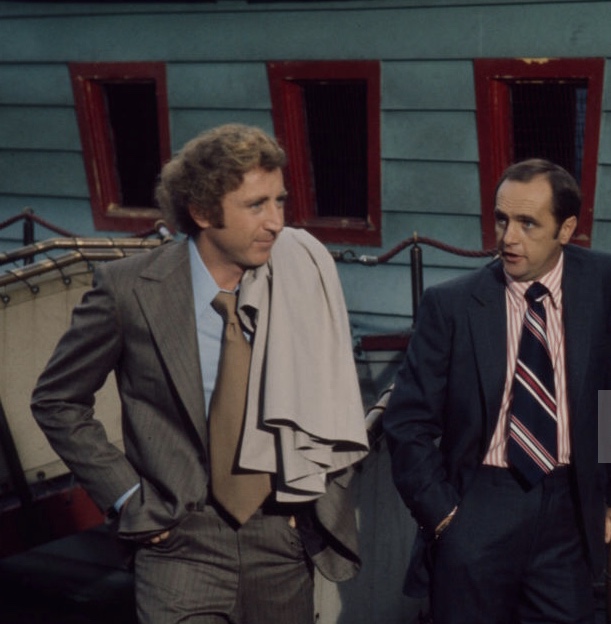
In 1971, Brooks tried his luck with a feature film. Thursday’s Game was an ABC movie that didn’t air until April 1974. Gene Wilder and Bob Newhart are two guys who enjoy a poker game with friends every Thursday night. When the game breaks up because of a fight and they need something new to do, Wilder and Newhart are forced to confront their inadequacies in life, especially when Wilder loses his job producing a crappy game show.
This all-star cast looks like a powerhouse now, but in 1971 many of them were not yet household names: Ellen Burstyn (two years before The Exorcist), MTM cast members Valerie Harper and Cloris Leachman, Rob Reiner (the same year All in the Family debuted), Norman Fell (five years before Three’s Company) Chris Sarandon (four years before Dog Day Afternoon) and Nancy Walker (same year as McMillan and Wife and three years before Rhoda, not to mention those Bounty commercials). By the time Game aired in 1974, some of these people were better known, including Brooks.
Game feels like the sort of thing the future creator of Terms of Endearment would write. It has its funny moments—Walker plays an unemployment agency counselor, and her scenes with Wilder are cute—mixed with a little drama: Wilder and Burstyn’s marriage is in jeopardy due in large part to his inability to admit he lost his job; he pretends his Thursday night poker game is still going on, but he actually stays out all night with Newhart, which naturally stresses her out. Game is less funny-ha-ha and more funny-ain’t-life-peculiar.
Steve at Movie Movie Blog Blog wrote about Game last year. I agree with him in that the poker scene in the beginning was a highlight and that nothing afterwards is quite as funny as that. The manic explosions Wilder was so great at are reined in and I admit, I kinda longed for more of them, but this isn’t that kind of movie. Indeed, at times Wilder looked like he was exploring his sexy side(?): he has a couple of shirtless scenes with Burstyn and Harper tries to seduce him in another scene. Young Frankenstein this is not.
I’d say Game is worth checking out overall, especially if you’re nostalgic for 70s television.
YouTube viewing
With 21 Emmys and three Oscars, including Best Picture and Best Director, James L. Brooks is an undisputed legend of the big and small screens. Let’s count the hits he was involved in creating, shall we: The Mary Tyler Moore Show. Rhoda. Lou Grant. The Tracey Ullmann Show. And of course, The Simpsons—and that’s just TV.
Switch to the movies and you can add Terms of Endearment, Broadcast News and As Good As It Gets, all Best Picture nominees he directed and wrote. As a producer, you can even add Jerry Maguire, Say Anything and Big.
Before all of that, though, he was just a TV writer from Brooklyn working his way through the 60s. He had been a copywriter for CBS News, writing for broadcasts and documentaries as well as some work as an associate producer before switching to sitcoms, like That Girl, The Andy Griffith Show and My Three Sons. He created the show Room 222, the second one with a black lead character.
In 1970, he and Allan Burns created MTM. 29 Primetime Emmys later, it made him a major player in television. Here’s a nice appreciation of the show from TV Guide in the context of the pandemic.
In 1971, Brooks tried his luck with a feature film. Thursday’s Game was an ABC movie that didn’t air until April 1974. Gene Wilder and Bob Newhart are two guys who enjoy a poker game with friends every Thursday night. When the game breaks up because of a fight and they need something new to do, Wilder and Newhart are forced to confront their inadequacies in life, especially when Wilder loses his job producing a crappy game show.
This all-star cast looks like a powerhouse now, but in 1971 many of them were not yet household names: Ellen Burstyn (two years before The Exorcist), MTM cast members Valerie Harper and Cloris Leachman, Rob Reiner (the same year All in the Family debuted), Norman Fell (five years before Three’s Company) Chris Sarandon (four years before Dog Day Afternoon) and Nancy Walker (same year as McMillan and Wife and three years before Rhoda, not to mention those Bounty commercials). By the time Game aired in 1974, some of these people were better known, including Brooks.
Game feels like the sort of thing the future creator of Terms of Endearment would write. It has its funny moments—Walker plays an unemployment agency counselor, and her scenes with Wilder are cute—mixed with a little drama: Wilder and Burstyn’s marriage is in jeopardy due in large part to his inability to admit he lost his job; he pretends his Thursday night poker game is still going on, but he actually stays out all night with Newhart, which naturally stresses her out. Game is less funny-ha-ha and more funny-ain’t-life-peculiar.
Steve at Movie Movie Blog Blog wrote about Game last year. I agree with him in that the poker scene in the beginning was a highlight and that nothing afterwards is quite as funny as that. The manic explosions Wilder was so great at are reined in and I admit, I kinda longed for more of them, but this isn’t that kind of movie. Indeed, at times Wilder looked like he was exploring his sexy side(?): he has a couple of shirtless scenes with Burstyn and Harper tries to seduce him in another scene. Young Frankenstein this is not.
I’d say Game is worth checking out overall, especially if you’re nostalgic for 70s television.
Tuesday, August 4, 2020
Trilogy of Terror
Trilogy of Terror
YouTube viewing
When I remember TV movies, I remember the epic mini-series of the 80s. They were trumpeted as a Big Deal in TV Guide and they usually had all-star casts, not that I would’ve heard of most of the names, but the point was they got my attention and I watched them, even if I was too young to completely understand what was going on.
As for the shorter, considerably less-than-epic ones, I think I understood even then that they were inferior to theatrical movies. I definitely remember The Day After and how that film stoked our nuclear apocalypse fears. When the Amy Fisher trial became popular, all three networks made TV movies about her! (I forget which one I watched.)
As kids, we also had the ABC Afterschool Specials: young adult melodramas about the issue of the week, usually starring some popular teen actor from television. Here’s a MeTV top ten list. I don’t remember any of these; I think I only watched them sporadically—why would I, when GI Joe and He-Man were on instead?
TV movies get a bad rep, it’s true, but back in the 70s, they aimed a little higher, had greater aspirations, and were more memorable overall. I’ve already discussed some of them, like The House That Would Not Die with Barbara Stanwyck, and Duel, the first feature film directed by Steven Spielberg. This month I’m gonna look at some more, and today we’ll begin with one that developed a huge cult following to become a pretty big hit thanks to a certain terrifying-looking doll.
YouTube viewing
When I remember TV movies, I remember the epic mini-series of the 80s. They were trumpeted as a Big Deal in TV Guide and they usually had all-star casts, not that I would’ve heard of most of the names, but the point was they got my attention and I watched them, even if I was too young to completely understand what was going on.
As for the shorter, considerably less-than-epic ones, I think I understood even then that they were inferior to theatrical movies. I definitely remember The Day After and how that film stoked our nuclear apocalypse fears. When the Amy Fisher trial became popular, all three networks made TV movies about her! (I forget which one I watched.)
As kids, we also had the ABC Afterschool Specials: young adult melodramas about the issue of the week, usually starring some popular teen actor from television. Here’s a MeTV top ten list. I don’t remember any of these; I think I only watched them sporadically—why would I, when GI Joe and He-Man were on instead?
TV movies get a bad rep, it’s true, but back in the 70s, they aimed a little higher, had greater aspirations, and were more memorable overall. I’ve already discussed some of them, like The House That Would Not Die with Barbara Stanwyck, and Duel, the first feature film directed by Steven Spielberg. This month I’m gonna look at some more, and today we’ll begin with one that developed a huge cult following to become a pretty big hit thanks to a certain terrifying-looking doll.
Labels:
horror,
movie makers,
movie stars,
television,
writing
Sunday, August 2, 2020
Books: The Dreams and the Dreamers
The 2020 Summer Reading Classic Film Book Challenge is an event in which the goal is to read and write about a variety of books related to classic film, hosted by Out of the Past. For a complete list of the rules, visit the website.
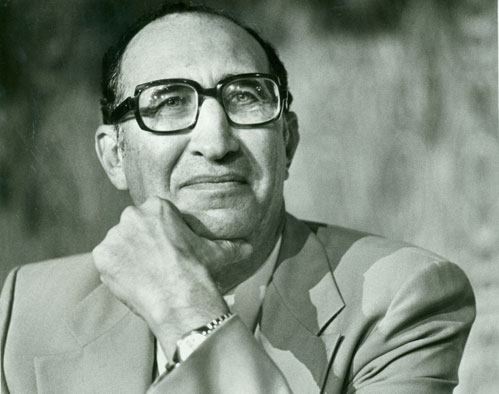
Hollis Alpert founded the National Society of Film Critics in 1966, when he wrote for the Saturday Review. Pauline Kael was a founding member.
Basically, they were a bunch of New York critics who couldn’t get into the more prestigious New York Film Critics Circle, which included major newspaper critics like the New York Times’ Bosley Crowther. Though they were New York-based, the magazines they wrote for had national circulations, hence their name. Every year they hand out best-of awards and are considered a major stop on the road to the Oscars.
Alpert wrote a number of novels and film-related books, including biographies of Federico Fellini and the Barrymore family. In 1962, he collected a bunch of his Saturday Review columns into a volume: The Dreams and the Dreamers: Adventures of a Professional Movie Goer. This is another book from Bibi’s library’s collection of discarded books that she sent to me.
This book was of interest because of the period it covered: the early 60s, when the Hollywood studios were on the decline. Alpert discusses the rise of foreign filmmakers, the actor-producer in Hollywood, film vs. theater, movie censorship, the pay-per-view TV experiment, and profiles people such as Alfred Hitchcock, producer Ross Hunter, and actress Jean Seberg.
In his introduction, he discusses the evolving perception of film and film criticism, as a result of what was then a new level of discourse: classes on film in universities, art house cinemas springing up in big cities, serious discussion of movies in other countries like France. He concludes this new audience needs a new kind of critic:
I understand that much. Thanks to the Internet, I can sound like a big shot if I want to whenever I write about movies, and I grok the necessity of expanding one’s sphere of knowledge in evaluating a work of art such as film, but as I’ve said many times, I do not consider what I do “film criticism,” even now, ten years later.
I don’t actively search for the Big Meanings in movies or analyze the style of a particular director or actor unless I feel a strong need to, usually as a result of some personal connection I’ve made with a movie, and if I do, I’m as likely to disagree with the prevailing wisdom as anything else, for reasons I may not be able to fully articulate.
I’m just not that good a film writer. Besides, I like to have some fun in writing about movies, and at times that has meant writing in a... non-standard format. Long-time readers will know exactly what I mean.
Alpert’s writing is illuminating in some places, boring in others, yet definitely written from a distinct point of view. Not quite as lively as reading Kael or Roger Ebert, but as a portrait of world cinema in a critical time of transition, it’s not bad.
———————
Previously:
The Real Tinsel
Hollis Alpert founded the National Society of Film Critics in 1966, when he wrote for the Saturday Review. Pauline Kael was a founding member.
Basically, they were a bunch of New York critics who couldn’t get into the more prestigious New York Film Critics Circle, which included major newspaper critics like the New York Times’ Bosley Crowther. Though they were New York-based, the magazines they wrote for had national circulations, hence their name. Every year they hand out best-of awards and are considered a major stop on the road to the Oscars.
Alpert wrote a number of novels and film-related books, including biographies of Federico Fellini and the Barrymore family. In 1962, he collected a bunch of his Saturday Review columns into a volume: The Dreams and the Dreamers: Adventures of a Professional Movie Goer. This is another book from Bibi’s library’s collection of discarded books that she sent to me.
This book was of interest because of the period it covered: the early 60s, when the Hollywood studios were on the decline. Alpert discusses the rise of foreign filmmakers, the actor-producer in Hollywood, film vs. theater, movie censorship, the pay-per-view TV experiment, and profiles people such as Alfred Hitchcock, producer Ross Hunter, and actress Jean Seberg.
In his introduction, he discusses the evolving perception of film and film criticism, as a result of what was then a new level of discourse: classes on film in universities, art house cinemas springing up in big cities, serious discussion of movies in other countries like France. He concludes this new audience needs a new kind of critic:
...The movie critic can no longer get by with a slapdash attack on one movie, panegyric of enthusiasm for another. More, whether he knows it or not, is demanded of him. He is expected to have some more than cursory acquaintance with the fields of literature, theater, philosophy, science, art, and music—for movies, inevitably, when they are serious, and even when they are not—touch on all these fields. Sad to report, the average movie reviewer, by and large, is simply not up to the movies he writes about. He may feel at home with a film in which Rock Hudson and Doris Day engage in a game of mistaken identities, but some other level of evaluation is required of him when he deals with Antonioni, Resnais, and Bergman (Ingmar, not Ingrid).
![]() |
| Hollis Alpert |
I don’t actively search for the Big Meanings in movies or analyze the style of a particular director or actor unless I feel a strong need to, usually as a result of some personal connection I’ve made with a movie, and if I do, I’m as likely to disagree with the prevailing wisdom as anything else, for reasons I may not be able to fully articulate.
I’m just not that good a film writer. Besides, I like to have some fun in writing about movies, and at times that has meant writing in a... non-standard format. Long-time readers will know exactly what I mean.
Alpert’s writing is illuminating in some places, boring in others, yet definitely written from a distinct point of view. Not quite as lively as reading Kael or Roger Ebert, but as a portrait of world cinema in a critical time of transition, it’s not bad.
———————
Previously:
The Real Tinsel
Saturday, August 1, 2020
‘Tenet’ to go int’l before US release: start of a trend?
...Warner Bros. said last week that “Tenet” would not have a traditional global day-and-date release — a surprising (though not unprecedented) break from tradition since North America is the world’s biggest film market and remains pivotal for major movies to turn a profit. But the studio hopes to innovate and recalibrate given the fact that foreign markets are already starting to reopen safely and desperately need new Hollywood movies to entice crowds.If theaters in other countries are ready to go and we’re not, then they probably should get to see Tenet first. It’s unfortunate that piracy and spoiler-filled online discussions are the price Americans will have to pay until we can see the movie safely, but maybe it’s what we deserve for not wearing masks.
I’m seeing a lot of talk about the possibility of Hollywood productions moving abroad for the short term. That’s a trend that had started before The Virus: James Cameron, for instance, has been making the Avatar sequels in New Zealand, and after a brief shutdown earlier this year, he’s back at it. I could see some studios relocating to someplace like Vancouver if it was a matter of keeping their doors open and getting new product to those international markets. Meanwhile, streaming and VOD options remain a safe and viable option.
Regarding Tenet: I remain uncertain whether or not I’ll go see it, assuming theaters will be open by September (not a sure thing at all). If this had been a normal year, there’s no question I would’ve been there opening weekend, but the incredible amount of buildup around this movie once again has me questioning whether or not any of it is warranted. I’m sure it is and I’m just being contrary.
I’m more concerned about the possibility that I may have to let go of my attachment to the theatrical experience of seeing a movie sooner rather than later—but I’ll talk more about that later this month. One thing’s for sure: movies and TV won’t look the same once this is over. (Speaking of Tenet, did you know star John David Washington used to play in the NFL?)
More to follow.
Labels:
friends,
health,
movie industry,
travel,
urban living
Thursday, July 30, 2020
Nude on the Moon
Nude on the Moon
YouTube viewing
They’re not nude, just topless.
I really feel you should know that before anything else.
Does it matter? Eh, not really. A movie with a title like Nude on the Moon is made for one reason and one reason only—to see lots and lots of hot chicks—and in that sense, this delivers big time. The girls in this movie may not actually be nude, but they are all gorgeous and they’re filmed perfectly, with a steady camera and in plenty of sunlight.
Lots of dudes made nudist camp and “nudie cutie” films back in the late 50s and early 60s, such as Russ Meyer, whom we talked about earlier this month, and while those films served a market Hollywood wouldn’t touch, the vast majority of them faded into obscurity in time. So why has this one not only survived, but is remembered today, if only by a few die-hard cultists?
This one was not made by a dude.
YouTube viewing
They’re not nude, just topless.
I really feel you should know that before anything else.
Does it matter? Eh, not really. A movie with a title like Nude on the Moon is made for one reason and one reason only—to see lots and lots of hot chicks—and in that sense, this delivers big time. The girls in this movie may not actually be nude, but they are all gorgeous and they’re filmed perfectly, with a steady camera and in plenty of sunlight.
Lots of dudes made nudist camp and “nudie cutie” films back in the late 50s and early 60s, such as Russ Meyer, whom we talked about earlier this month, and while those films served a market Hollywood wouldn’t touch, the vast majority of them faded into obscurity in time. So why has this one not only survived, but is remembered today, if only by a few die-hard cultists?
This one was not made by a dude.
[STILLS FROM THE FILM TO FOLLOW: NSFW!!!]
Subscribe to:
Posts (Atom)