The Secret Life of Walter Mitty (1947)
seen on TV @ TCM
12.26.13
Imagination is a great thing to have. I had talked here once about an artist I knew named Hilda, who believed in past lives. She also believed that imagination was a kind of realm from which humanity draws ideas from. Think of the notion of the sculptor who claims that his sculpture was within the clay all along, and that all he did was bring it to the surface. Hilda's concept was similar. She believed that we don't create so much as we take from what's already within nature.
It's an idea which has fascinated me ever since, to the point where I wrote a short story inspired by the notion. It was about what happens when limits are placed on imagination as a result of man's folly and ignorance. Of course, it's set in a dystopian future - partially.
In the story, I posited that the ability to dream, to imagine, is something that's inherent within everyone. There have been occasions throughout my life where some people have looked at my art and said things like, "Oh, I wish I could draw like that," and I always tell them that you can if you really want to. Some of the best artists I've known are self-taught. I've found throughout the years that many non-artists see what artists have as an inherent, "God-given" talent, and that's partially true... but even that spark of talent needs to be fanned into a flame.
I have a friend who's dabbling in photographic art with her cellphone camera because she's always had a deep admiration and appreciation for art in general and now, as she's deep into middle age, she wants to see what she can do on her own. She posts her pics on Facebook. They're not bad. My point is that imagination is healthy and often leads to great discoveries.
I've never known anyone who has perpetually had their head in the clouds, though. I'm sure such people exist, but the idea always kinda struck me as a well-worn storytelling trope that was shorthand for "simple-minded." People with ADHD are known to daydream, for example, but that doesn't make them simple-minded. It's often times just a different way of thinking, in which one doesn't go from A to B to C so much as go from A to Q to K before arriving at B.

And so this brings us to the original film version of The Secret Life of Walter Mitty. (I was gonna watch both the original and the new version and compare them both in one post, but the remake is getting mediocre reviews, so I'm not gonna see it.) It's my understanding that the original short story by James Thurber was something of a cultural touchstone when it came out. I guess you just had to be there to understand, because I have a volume of Thurber stories which I've read, including "Mitty," and to coin a phrase, there's not a lot of "there" there.
Both the Danny Kaye and Ben Stiller films go as far afield from the story as they do because it's more of a character sketch than an actual plot. While it's not bad for what it is, I imagine it must have been the right story at the right time, more than anything else. (Brief aside: although I lived in Columbus, Ohio for a year, I somehow never made it to Thurber House, a museum dedicated to the writer and artist. Don't ask me why; just one of those things. I barely knew who he was at the time, and I never read "Mitty" until after I returned to New York.)
As for the Kaye movie, apparently Thurber hated it with a passion. I realize this film is deeply loved by a lot of people - and I've already gotten reamed on Twitter for expressing this opinion - but I'm completely sympathetic with him. It's almost painfully unfunny - I laughed three, maybe four times total, and they were more smirks than outright laughs - and the songs did nothing to improve the story. Kaye had a propensity for mimickry and for slipping in and out of different characters, I grant you, but I simply didn't care about Walter in the end. I don't see the appeal at all.
Anybody wanna defend it?
2013 wasn't too bad. Once again, there were new things I tried out here, to varying degrees of success. There were some great blogathons I took part in that inspired my imagination. And I got to attend a bunch of fine and varied outdoor screenings. I have some ideas about what I'd like to do for WSW this year, though at this point it would be premature to talk about them. I'm just glad I've lasted as long as I have with this blog. If there's anything you wanna see more or less of, please let me know and I'll do what I can.
One new element to the blog is a page called Blue Ribbon Films. These are the films on this blog that mean the most to me in terms of not only entertainment but important memories - of times, places, people and events that I associate with these films. I'll add to them over the few days.
Caftan Woman wonders how well we really remember It's a Wonderful Life.
Ivan reflects on his video store days.
ClassicBecky is back, and just in time for the height of Oscar season, she shows some love for Oscar-winning composer Bernard Herrmann.
Erica reviews a book that mashes up Star Wars with Shakespeare.
Retrospace collects a bunch of quotes from B-movie actresses who have done nude scenes.
AFFRM is stepping up to the next level in support of black cinema with their Rebel program.
Did Olivia DeHavilland and the late Joan Fontaine really have a long-running feud or not?
This graphic compares book reviews to reviews of the movies they were based on, from the recent past to the present.
Spike Jonze talks about the Beastie Boys movie that never happened.
Criterion could use some more animated movies, don't you think?
Her
seen @ Brooklyn Academy of Music, Brooklyn, NY
12.28.13
Forgive me in advance, but it's impossible for me to talk about Her without bringing up Star Trek. Why? Because artificial intelligence and the question of whether or not it can achieve what we call humanity is and has always been a common theme in Trek history. I think even the casual Trekkie can understand - in the future, as technology gets more and more sophisticated and plays a bigger and bigger part in our daily lives, our relationship with it will inevitably change.
It's something I've talked about here before (also in relation to Trek), but AI is a whole different animal. Anyone who spends enough time surfing the Net may be aware of the breakthroughs that have been made in robotics, and voice-activated software, and things like that. I remember a couple of years ago, I was playing around with an online program that was designed to hold a "conversation" with you as if it were a true AI, but in fact, it was simply a highly sophisticated program that had a wide variety of pre-programmed responses to direct questions. (No, I don't remember where it is.) Stuff, like this, though, is kids play compared to the more advanced stuff.

In Trek, one always sees this dichotomy between human life and artificial life: the latter is generally depicted as missing a certain something that makes it truly "human," but over time, its actions force us to redefine "humanity" as something more than a matter of biology. In the Original Series, Captain Kirk repeatedly exposed computer intelligences that others regarded as being indistinguishable from biological ones, or in some cases, better. In the first Trek movie, a super-computer created by man evolved to the point where it needed the spark of humanity to exceed its programming and become a new form of life.
In the latter day Trek spinoffs, we became acquainted with characters like Data, an android who strives to fully understand humanity despite the handicap of being programmed without human emotion; the Emergency Medical Hologram, a holographic intelligence forced by unusual circumstances to serve humanity beyond its original function, and becomes more human-like in the process; and others in similar situations.
We see them do things that humans do, and at every turn the question is raised as to whether or not doing these things makes them more human. At times, they've had to stand up for their right to exist as free-thinking individuals. In the end, though, what they are matters less than what they do, which makes them equal beneficiaries of the future built by humanity, in which the content of one's character matters more than physical appearance or personal ideology.
Her tackles a similar premise, filtered through perhaps the greatest of human traits: the capacity to love. The way we function with technology today, in some ways, is not unlike a romantic relationship in some ways. I know that I've developed a strong attachment with my laptop in the last five years. It has become my constant companion whenever I need to write, and sometimes I get anxious when I have it with me but I'm unable to use it, whether for lack of table space in a coffee shop, or lack of a Wi-Fi connection, or what have you. My cellphone has taken on a similar aspect.
Does this mean I'm in love with my gadgets? No, of course not. I don't think of them as being sentient. I go on Twitter to talk to my flesh-and-blood friends, not to my cellphone. I know that my gadgets don't have the capacity to interact with me the way humans can. But what if they did? For all of my easy acceptance of the premises in Trek involving AIs, if it were me in the position of learning to accept one as an individual, much less a potential lover, I'm not sure how well I could pull it off.
As I watched Her, one comparison that sprung to mind for me was that of a long-distance relationship - two people living far apart from each other. Being in one another's physical presence is impossible, therefore the two lovers must make do with only words, whether over the phone or through online communication. (Yes, I know about Skype; I didn't say it was a perfect comparison. Even that's not the same as physical presence, though.)
Long-distance relationships are doable, but man, are they difficult. It requires a great deal of trust that your lover will remain faithful in the absence of your physical presence. It requires being able to live on the few stolen moments in which you can communicate with your lover, assuming they're not busy with something else - or that you're not busy with something else. And it requires faith that your love is strong enough to withstand prolonged separation. Yes, I have tried it, and I didn't like it.
But is it better than no relationship at all, especially when you have trouble connecting with other people, as Joaquin Phoenix' character does? God knows I get lonely. I have a misanthropic streak that does keep me from reaching out to people sometimes, but I don't know whether it's the cause of me not finding love, or the result. I think, if I were desperate and lonely enough, I might be able to see myself growing attached to a self-aware gadget (though I wouldn't be nearly as open about it as Phoenix' character), but the lack of physicality would be a big problem. Scarlet Johansson's AI character attempts to find a way to compensate for this in one weird scene. I think I might go for her solution, the more I think about it.
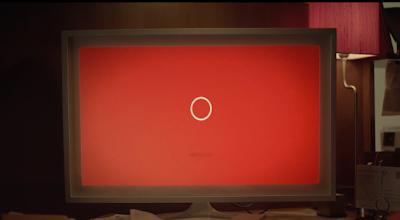
The ending of Her wasn't what I expected. It goes slightly askew from my genre expectations built from over twenty years of watching Trek, but then, this isn't Trek and doesn't pretend to be. I think a future like the one depicted here is coming sooner than we think, and we as a species need to figure out how we're gonna deal with it. Will artificial intelligence be given the opportunity to evolve and flourish in its own way, its own time, or will it be something to be feared and hated? Sounds like science fiction... but personal computers that fit into the palm of your hand seemed the same way too, once.
On an unrelated tangent: there was a piece in the New York Times about Her in which the production designer talked about de-emphasizing the hard tech aspects of the futuristic setting. At one point he mentions how the future Los Angeles utilized the above-street-level pedestrian walkways of Pudong, Shanghai. As a result, one only sees cars way off in the distance in the film. I found it interesting that cars are much less of a presence in the future America of Her. The best part is, they don't appear to be missed from the look of it. A small thing, perhaps, but worth mentioning.
American Hustle
seen @ Jamaica Multiplex Cinemas, Jamaica NY
12.24.13
I was still working video retail when David O. Russell started coming up in the film world. I remember watching Spanking the Monkey when it came out on video and thinking it was kinda bizarre, but funny. Then came Three Kings and I really enjoyed that one. That was in the super-awesome year of 1999, when so much good stuff came out. Still, I didn't think of Russell in the same vein as I did guys like Wes Anderson or especially Paul Thomas Anderson. I think at the time I thought of Three Kings as more of an actors' movie than a director's movie. Guys like PTA or Wes have a more easily identifiable style than Russell - at least, to the average fan.
Time has passed, and now I think that being an actor's director has definitely become Russell's trademark. Visually, I can't point to any one thing in American Hustle that strikes me as a Russell flourish - especially when it looks so much like a vintage Scorsese picture - but the acting is another story. Russell gets so much consistently good stuff out of his actors, from one movie to the next, and here it's just such a pleasure to sit back and watch them do their thing.
If Hustle is a Scorsese homage, then Christian Bale is the one in the DeNiro Method actor role (ironic, since DeNiro himself is also in this movie), which is made shockingly apparent from the first scene, when you see him with his great big gut. It's amazing how Bale can transform himself from being rail-thin to muscled like a superhero to fat and flabby. I can't imagine what such drastic weight fluctuations would do for his health, but give him credit for throwing himself so completely into his roles.

It's easy to simply fall in love with Amy Adams whenever she's on the screen because she is so beautiful, but then she does something that reminds you of how amazing an actress she is too. She genuinely surprised me in Russell's The Fighter three years ago, and here she gets to be sexier and more powerful, while still having a vulnerable side. No longer can one think of her as simply the demure good girl of her earlier movies. She's more than capable of being the queen bitch or the bad girl or the femme fatale, and it's exciting to see her in more roles like this.
Bradley Cooper and Jeremy Renner fit well in a film like this. The former, like he did in Silver Linings Playbook, isn't afraid to take his character to some unexpected places. The latter gets to show off some charisma in a role that's bigger than I thought it would be. Both of them have to deal with some outrageous hairdos. But I liked watching both of them also.
And then there's Jennifer Lawrence. She has a maturity and a poise for one so young that has to be seen to be believed. I know there have been other actresses who have been in her position as "most talented young actress of her generation" before: Winona Ryder, Natalie Portman, Keira Knightley, to name a few. And one wants to hesitate putting so much praise on Lawrence at such an early age, especially now that she's won the Oscar. But looking at her in Hustle, she really does make you want to believe the hype. The best may be yet to come with her.
Put it all together and you've got a highly entertaining movie with an ensemble cast firing on all cylinders. I loved this movie. I loved it a lot.
Inside Llewyn Davis
seen @ Kew Gardens Cinemas, Kew Gardens, Queens, NY
12.22.13
When I was in high school, I had this mild aspiration to be a musician. Part of it was my sister's influence. She's a singer, who performs in a band with her husband. They're good, too - they play semi-frequently around the New York area, playing R&B and pop cover songs. When I was in high school, she went with me to Sam Ash to help pick out a keyboard for me. I had taken lessons on the organ when I was younger and whaddya know, it took - for a little while, anyway. The songs I wrote were much closer to 80s cheese than anything else, and none of it was worth a great deal, but I was making music.
This was during the period where I had discovered classic rock for the first time and got deeply into not just the music, but the history and the culture behind it as well. I was dating a girl who was also into classic rock, and was learning how to play guitar. She had friends who were the same. We all thought the 60s were the coolest time to be a musician and couldn't get enough of that music.

One day I was coming from a summer art class in Greenwich Village and wandering around the neighborhood, which was still quite new to me, when I encountered a street musician. Her name was Ann Marie. I'd say she was in her mid-to-late 30s when I met her. She played outside the Christopher Street subway station, less than a block away. I wouldn't call her a folkie - her music was closer to Melissa Etheridge than Suzanne Vega - but personality-wise, she came across kinda like a former hippie. She was very friendly and more than willing to indulge this starstruck black kid who she didn't know from Adam. Looking back on it now, I feel grateful for that.
I couldn't tell you for certain what exactly it was about her that made me decide to talk to her and get to know her (in a non-romantic way; I wasn't in love with her), as opposed to simply listening to and enjoying her music. If anything, I think it may have had something to do with the... mystique, or lore, of what it meant to be a musician in general and to be a musician in the Village in particular. At the time, my head was filled with romantic notions of the 60s and the "purity" of rock music: playing your own instruments, writing meaningful songs that touched people's hearts as well as their libidos, basically music as capital-A Art... and I suppose in Ann Marie I saw some aspect of that ideal.
Not that I could've told you that at the time. I just acted on impulse, without thinking too much about it. It never occurred to me to not try to reach out to her and get to know her, because being a musician and living some sort of Bohemian lifestyle associated with that appealed to me at the time, even though I had absolutely no idea how far off the mark about it I was.
Which brings us to Inside Llewyn Davis, a Coen Brothers movie about the reality behind that Bohemian fantasy of being a 60s musician. Folk music never thrilled me as much as rock, though of course, I learned about Simon & Garfunkel and Bob Dylan and Peter, Paul & Mary and the Mamas and the Papas at the same time as I learned about the Beatles and the Stones, and I liked them as much. My girlfriend in particular had a jones for songs like "Like a Rolling Stone" and tried playing them on her guitar all the time. (She even had a harmonica, which she cherished like a lucky charm.)
I saw Llewyn with Vija, and I knew I wanted to see it with her because she had lived through the 60s, even if only as a Midwestern teenager somewhat removed from the extremes of the culture, as embodied in places like New York and San Francisco. As a result, she liked the movie more than I did. We both agreed the music was very good, though not quite on the same level as that of O Brother Where Art Thou (which she loves), but I thought it was just mining familiar Coen Brother territory again: let's laugh at the Jewish sad-sack guy who can't catch a break in life. I did appreciate how the location shots were done up to match the era - subway stations, street signs, etc. And Oscar Isaac was very good as Llewyn.

Over dinner afterwards, Vija told me a little more about the 60s from her perspective, like the first times she went to New York and San Francisco. She said that growing up in the Midwest made it harder for her to get the full cultural experience of the times, but she still knew a lot of characters like those in Llewyn.
She was never a musician, but she did catch what stood out as musical allusions in the plot which would've flown over my head. For example, there's a scene where Llewyn gets offered the chance to join the group which we know now as Peter, Paul & Mary, but he turns it down because he didn't like harmonizing in his music. The reference is an indirect one, but she recognized it right away and I didn't.
This was the first time I had seen a movie with Vija at the Kew Gardens. I had to provide instructions to get there from the subway, because it's not exactly a direct distance, but she found it on her own - in fact, she actually snuck up on me as I was sitting on a bench reading some Internet article on my cellphone. I totally didn't see her coming!
It was unusually warm on Sunday, but she was worried that it would get colder by the time the movie let out, so she wanted to find a clothing shop where she could find a little something to wear. We ended up going into a tiny boutique owned by some Japanese dude where she tried on a few coats (I thought she just wanted a shawl). Vija's smallish; for the longest time, I used to have this mental image of her as being taller and skinnier than she actually is. She's not tiny, though, nor is she fat; I'd say she's between 5'4" and 5'6".
Point is, none of the coats in the store fit her, and the guy said it was because they were originally made for Asian women! She got a good laugh out of that. (Apparently they were okay for the Orthodox Jewish women in the neighborhood as well, hence his being in Kew Gardens in the first place.) As it turned out, the weather was comfortably cool by the time the film let out and she didn't need anything heavier than what she had on, a long wooly sweater.

It was nice to see a big crowd at the Kew Gardens - I'm used to going in the late afternoons during the week - though the bigger crowd meant bigger distractions. At the beginning of the movie there were some cellphone users who had to have them on, but they subsided after the first ten minutes or so. More annoying was a woman a couple of rows in front of us who was eating something while crinkling what sounded like cellophane. Repeatedly. This lasted longer, and while I wanted to say something, I didn't want to embarrass Vija by saying or doing something I'd regret, so I put up with it. She stopped as well, eventually, so it worked out fine.
Man on Fire
seen on TV @ Spike
12.18.13
Director Tony Scott died last year, as you probably know. I had nothing against him as a director; I really like Crimson Tide and True Romance, and I can watch most of his other movies if there's nothing else on (they certainly get played on cable often enough), though he was rarely someone I went out of my way for.
He tended to be flashier than his brother Ridley, and his films were almost always heavy on the testosterone (though he did do The Hunger with Catherine Deneuve and Susan Sarandon before he got his rep as an action director, so there's that).
Like I said, though, his films were entertaining, especially if all you wanna do is kick back with a few of your friends for a couple of hours and get your fill of high-powered action and suspense. Scott's films may have had tortured, convoluted plots at times, but unlike Michael Bay, I rarely felt like Scott was insulting my intelligence in terms of story or characters. A movie like Top Gun seems campy now, in retrospect, but I remember when it first came out. It was the perfect film for the Reagan 80s, and its iconography still looms large today (for better or for worse).
Scott made five movies with Denzel Washington, including four of his last five features. I didn't see Man on Fire when it came out, but I had heard it was pretty good, so when I saw that it was on TV last night, I gave it a shot. It's basically a revenge flick, but Denzel is pretty hardcore in it, to a degree we rarely see in his action movies.
I mean, he tortures dudes, blows up cars with a missile launcher, takes all kinds of damage and delivers some damage of his own and I'm not talking about the "safe," semi-glamorous type, either. This is a brutal, hard-R movie where people die or get hurt in gruesome ways. But they all deserve it, so it's alright, kids!
I got the impression Scott was trying to experiment with his visual style in Fire. He pulls out all sorts of weird and wacky stylistic stunts - jump cuts, negative imagery, slo-mo, monochrome - all in this bizarre kind of hodgepodge that, I gotta say, didn't add much to the story. In Enemy of the State, this sort of thing made a kind of sense; that film was about modern surveillance techniques in a digitized world, and having a heavily stylized look was more appropriate, but here it just gets in the way and calls more attention to itself than it should. I liked Fire in spite of all that stuff, not because of it.
One thing I can respect about Scott's films is that they kept alive the paradigm of the 80s-model action film: stunt-heavy action, clear-cut good guys and bad guys, and A-list superstars. That last part is especially important. Superstars are less of a requirement in action films these days, it seems, and to someone like me who grew up with the Arnie-Sly-Bruce paradigm, this strikes me as a bit disappointing. I admit that these kinds of action movies hold less of an appeal to me today than they did when I was thirteen and they were all the rage, but at the same time, I'd hate to see them go away.
Scott was one of the last action-movie guys who consistently cast A-listers, and I suspect that was a big part of his appeal. Now he's gone, and the current paradigm is computer-generated superheroes where the characters are the attraction, as opposed to the stars. Times change, I know that, and what's cool one year is passe the next - law of the jungle - but it's a little disappointing all the same.
So here's to you, Tony Scott. Thanks for keeping on as long as you did.


